

A featured contribution from Leadership Perspectives: a curated forum reserved for leaders nominated by our subscribers and vetted by the Construction Tech Review Advisory Board.

chairman of Ascertain
AI to Disrupt Health Inequities in America
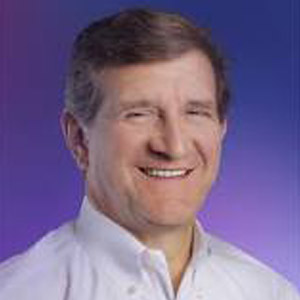
Michael Dowling
Artificial intelligence can help close the equity gap in healthcare. How this will happen may surprise you. Why it must happen should not.
In October 2021, the New York City Board of Health declared racism a public health issue and in response, called on the city health department to achieve a “racially just” recovery from the Covid-19 pandemic. The resolution was prompted by the revelation that the age-adjusted, Covid-19 fatality rate of New York’s BIPOC (Blacks, indigenous and people of color) population was twice as high as white New Yorkers.
At Northwell Health, New York’s largest health system, we know health disparities will only grow worse if we don’t move more quickly to identify and correct them. To do that, we have turned to AI to disrupt this future.
AI enables us to use data science to diagnose and treat patients earlier and develop solutions that are more effective and less costly. According to McKinsey Healthcare Analytics, AI could address health disparities while unlocking $400-600 billion of value.
One clinical condition that underscores the disparities affecting people of color is pre-eclampsia, a pregnancy complication characterized by high blood pressure that threatens both mother and fetus. Pre-eclampsia affects Black women at three times the rate of whites. Using AI, our clinicians and data science teams at Northwell Health and Ascertain are examining hundreds of past cases to better forecast expectant mothers who could benefit from additional specialized care and early intervention in the future.
AI can also help identify patients who have conditions that are undertreated or undiagnosed. By combining health screening and predictive models for conditions like obesity, hypertension, and diabetes, AI can forecast which patients are likely to develop health problems. Northwell health deployed similar tools during the first Covid surge to help inform doctors on the frontlines to make life-saving decisions.
Despite its promise, AI is not a substitute for good clinical care but it can provide clinicians with additional knowledge and understanding of patients. But flawed AI models can under-represent diverse populations, deepening bias rather than reducing it. For example, a recent study found that one prediction algorithm popular with health systems inadvertently exhibits substantial bias against black patients. Because our nation’s healthcare system consistently spends less money caring for black patients than whites (72 percent of the $2.4 trillion spent), the flawed AI tool resulted in under-allocation of resources for the care of black patients, who are likely to be sicker than cost indicators alone would suggest.
We are still researching how much benefit will accrue from intelligent and responsible use of AI, but we know it will be substantial, because it will help us anticipate major cost drivers like disease onset and progression ahead of expensive and damaging health consequences. The result will be more access and gradual treatment instead of sudden, catastrophic intervention.
By combining health screening and predictive models for conditions like obesity, hypertension, and diabetes, AI can forecast which patients are likely to develop health problems.
Recent initiatives like “All of Us,” a National Institutes of Health program that seeks to obtain health data from one million American volunteers of all backgrounds, will give AI researchers data that’s more representative of the nation’s population, offering further opportunities to address the unmet health needs of those who are more vulnerable to illness and death.
AI offers us the opportunity to unbundle our healthcare system and recreate it in new ways that make more sense, clinically and financially.
We call on leaders of healthcare organizations across the spectrum to commit themselves and their resources to this mission and use AI to disrupt the inequities persistent within America’s healthcare system.
We urge them to focus on these four actions that will drive real, lasting change:
•
Challenge your clinicians to pursue new research on health inequities.
•
Leverage creative collaborations across multiple domains such as science, technology, clinical care, and venture capital.
•
Commit to the high standards of data integrity being promulgated by regulatory authorities like the FDA and similar bodies in the UK and Canada to ensure trust in AI innovation.
•
Apply the Hippocratic oath to AI. In other words, learn how AI is already being used in your clinical services and verify that it is being properly deployed and not widening the inequities gap.
Covid’s unconscionable death toll on people of color demands an immediate response and commitment from America’s healthcare leaders, who can no longer ignore this enduring, pernicious problem as a challenge too big to solve. AI is a powerful weapon that will ensure effective and affordable healthcare for all. It’s a mission we must embrace.
Michael Dowling is president &CEO of Northwell Health, New York State’s largest healthcare provider and private employer. Tom Manning is chairman of Ascertain, an AI joint venture between Northwell and Aegis Ventures.
