









APAC CIOOutlook
About UsConferencePartner With Us
  • Technologies
    • Blockchain
      Data Intelligence and Management
      Digital Transformation
      FinTech
      Generative and Agentic AI
      Low Code No Code
      Mobile Application
      Networking
      Robotics
      Storage
      Wireless
  • Industries
    • Automotive
      Aviation
      Banking
      Construction
      E-Commerce
      Food and Beverages
      Healthcare
      Insurance
      Logistics
      Manufacturing
      Retail
      Supply Chain
      Travel and Hospitality
  • Platforms
    • Microsoft
      Salesforce
      SAP
  • Strategic Solutions
    • Business Intelligence
      Contact Center
      Corporate Finance
      CRM
      Cyber Security
      Data Center
      Enterprise Asset Management
      Enterprise Performance Management
      IT Infrastructure and Services
      Managed Services
      Procurement
      Unified Communication
      Workflow
  • Home
  • CXO Insights
  • Leadership Perspectives
  • Innovation Insights
  • Research
  • News
  • Whitepapers
  • CXO Awards
#

Apac CIOOutlook Weekly Brief

×

Be first to read the latest tech news, Industry Leader's Insights, and CIO interviews of medium and large enterprises exclusively from Apac CIOOutlook

Subscribe

loading

THANK YOU FOR SUBSCRIBING

  • Home
  • Data Intelligence and Management
Editor's Pick (1 - 4 of 8)
left
Building BPAY Group's New Digital Foundation

Angela Donohoe, Chief Information Officer, BPAY Group

How Have Recent Advancements in Big Data Been Impacting Businesses?

Marc Solomon, CIO, Bvn Architecture

Creating Integrated Workflows for an Evolving Company

Mike Everly, CIO, D&H Distributing

The Impact Of Technology On Travel And Hospitality

Steve Traplin, CEO, Groupon APAC

Fusing Business and Technology to Create Value

Bob Hennessy, Group CIO, Lendlease [ASX: LLC]

Tech Strategy for Capital Markets and Other

Jeff Roberts, CIO, HFF

Transformations in Financial Technologies

Jacob Sorensen, CIO, Bank of the West

Infinite Retailing, And Beyond

Frank Trampert, Managing Director & Chief Commercial Officer, Sabre Hospitality Solutions, APAC

right

Data Driven Business Insights, Big or Small: We Like them All

Pedro URIA-RECIO, Head of Axiata Analytics Center, Axiata Group Berhad

Tweet
content-image

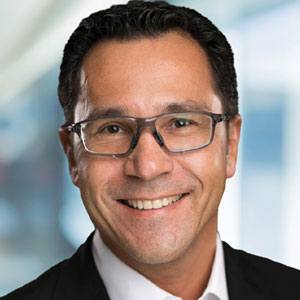
Pedro URIA-RECIO, Head of Axiata Analytics Center, Axiata Group Berhad

When I worked as a McKinsey consultant, I served the CEO of a bank regarding his small business strategy. I wanted to run regressions on the bank’s data but I was advised against it: “They don’t even understand statistics. How are you going to explain a regression to them?”

CEOs have always needed to deeply understand human intelligence and emotion to manage enterprise teams. Now machines and algorithms are increasingly becoming part of these very teams. The job of a CEO in the age of artificial intelligence (AI) is to design new combinations of technologies, assets as well as human and machine skills to revolutionize business models. Understanding human intelligence alone is no longer enough.

Most recent advances in AI have been achieved in the area of machine learning (ML). Vision systems, speech recognition technologies or recommendation engines would not have been possible without ML. ML is a technological breakthrough which allows data scientists to write relatively generic software that can learn how to solve a problem without needing to specify a myriad of detailed step-by-step instructions.

There are three major types of ML methodologies: supervised, unsupervised and reinforcement learning.

Supervised Learning: Preparing Math Exams

One learning method I enjoyed at university was reviewing solved math problems to prepare for the exam. Similarly, supervised learning algorithms learn how to solve a problem by looking at a lot of examples of the correct answer.

Regressions are by far the most popular supervised algorithm. Regressions try to fit a formula, for example linear or quadratic, in your data. If you think there is a linear relation between your sales and factors such as competition prices, your advertising spend, promotions or even the weather, you can train a linear regression algorithm with historical data for which you already know your sales. The algorithm will learn the right parameters of the formula, which will be used to predict future sales.

A special kind of regression, called logistic regression, which uses a simple exponential formula, can be used to categorize items into groups instead of providing a continuous numeric prediction. For example, a logistic regression could learn to estimate whether a potential customer will default on a loan or not, by looking at characteristics of historical customers and their loans, for which we already know the outcome.

Without any doubt the most interesting kind of supervised algorithm are neural networks, which mimic how our brain works.

The job of a CEO in the age of artificial intelligence is to design new combinations of technologies, assets as well as human and machine skills to revolutionize business models

Neurons are organized in a network of layers. Neurons in each layer are getting some input from neurons in the previous layer and are giving some output to neurons in the next layer. Complex neural networks with a large number of layers are called deep neural networks. The performance of simple networks improves with more solved examples but only up to a point after which additional data does not lead to better predictions. However, deep neural networks do not seem to have this limitation.

There are two kinds of neural networks. Firstly, convolutional neural networks make each prediction independently of former predictions and are typically used for image processing, for example, to diagnose cancer based on a medical image, to find your logo on social media or in street images or to detect defective products from images from your product line. However, some problems require remembering the context because the value of each prediction depends on previous inputs or outputs. This second kind of networks is called recurrent neural networks and is typically used for time-series applications such as language processing/translation or video interpretation.

Unsupervised Learning: Recognizing Cats Or Dogs

Humans are excellent unsupervised learners. We can learn to tell the difference between a cat and a dog with no training, just by looking at many of them and identifying patterns. But, it is difficult to build a machine that works this way. Unsupervised learning is far less developed than supervised learning for the time being.

Unsupervised learning is typically used when you do not have solved examples and you need the algorithm to find patterns and classify data for you. For example, unsupervised algorithms such as K-means can be used to segment customers. K-means will group your customers in a predefined number of clusters in a way that clusters are as different as possible from each other and customers inside each cluster are as similar as possible. Other unsupervised algorithms like multivariate gaussian distribution can be used to identify anomalous behaviors such as fraud or machinery faults.

Reinforcement Learning: Playing Video Games

Some of my friends in the 90’s managed to pass video games such as Mario or Sonic in a few days by trial and error for hours and hours. Sometimes the only way you can learn about the environment is by interacting with it. Reinforcement learning algorithms learn to perform a task simply by doing it and by trying to maximise a reward. You will need to specify the current state and the goal, the list of allowable actions and the constraints, and most importantly, the reward system.

For example, Google’s AlphaGo used reinforcement learning to play the ancient Chinese game of Go and eventually defeated South Korean champion Lee Sedol in 2016. Other applications include optimizing a trading strategy or a real-time pricing approach and managing exceptions caused by storms in the maritime industry.

Conclusion

Machines can be exceptionally good, sometimes far better than humans, doing very specific tasks, such as identifying cancer in a medical image, but this does not mean computers can understand what cancer is, how it develops or how to stop it. A machine’s narrow understanding of a very specific problem does not involve broader intelligence. At least not yet. You still need a doctor for that.

Likewise, humans and algorithms will collaborate together in the enterprise. Instilling a data-driven culture whereby the first reflex to solve a problem is looking at data, requires the CEO to understand at least the very basics of the technologies that make it possible to learn from data.

tag

Machine Learning

Weekly Brief

loading
Best IT Database Consultancy Services - 2025
Featured Issue
Previous Next

I agree We use cookies on this website to enhance your user experience. By clicking any link on this page you are giving your consent for us to set cookies. More info

APAC CIOOutlook
Follow on LinkedIn

About

  • Home
  • About Us
  • Partner With Us

Stay Connected

  • Subscribe
  • Newsletter
  • Sitemap

Contact Us

  • editor@apacciooutlook.com
  • sales@apacciooutlook.com
  • marketing@apacciooutlook.com

Legal

  • Editorial Policy
  • Privacy Policy
  • Terms of Use

© 2026 APAC CIOOutlook. All rights reserved. Headquarteblue in Fort Lauderdale, FL, USA.

This content is copyright protected

However, if you would like to share the information in this article, you may use the link below:

https://www.apacciooutlook.com/views/data-driven-business-insights-big-or-small-we-like-them-all-nwid-5701.html