

A featured contribution from Leadership Perspectives: a curated forum reserved for leaders nominated by our subscribers and vetted by the Construction Tech Review Advisory Board.

Patterson Companies
Lessons from the Front Line
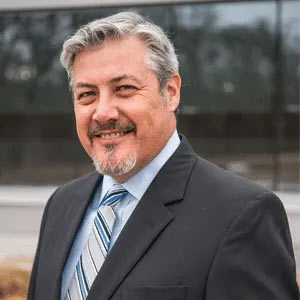
John Graham
Lots of things have changed since my first job in the call center world. For starters, now we call them Engagement Centers. I believe that’s the newest iteration of our little call center industry. Other changes are more fundamental. Over the 10 years I spent on the front line, answering incoming sales and customer service calls, most of the loop holes have been filled by technology. Attribute based routing has eliminated my old trick of hitting not ready/ready to get pushed to the back of the queue. 100% call recording would have kept me from dialing 555-1212 (current time recording) to avoid taking another call. Besides technology, I believe the biggest change in our wonderful Engagement Center world is the positioning we have been afforded at the infamous “table” in our businesses.
Facebook got the ball rolling in a big way and now others have stepped in targeting highly dense solutions. Those of us involved are ‘standing on the shoulders’ of Facebook for the collective Open Compute Project, as Linus Torvalds is known for saying about the successful open source development of Linux.
When I started in 1985, nary an executive cared about us, we were a cost center, a necessary evil. Everyone knew it, especially the front line. Sure, they created a Hallmark holiday for us (Customer Service Week). But, that’s about it. Engagement Center reps are THE most scrutinized workforce I can think of. Every second is recorded, tracked, reported on and analyzed. I’m not sure how many of us could make it to the other side with that type of scrutiny. If you get nothing else from the next 3 minutes, at least go and thank an Engagement Center rep, give them a high five or nukes, something to let them know you appreciate them.Facebook got the ball rolling in a big way and now others have stepped in targeting highly dense solutions. Those of us involved are ‘standing on the shoulders’ of Facebook for the collective Open Compute Project, as Linus Torvalds is known for saying about the successful open source development of Linux.
Facebook got the ball rolling in a big way and now others have stepped in targeting highly dense solutions. Those of us involved are ‘standing on the shoulders’ of Facebook for the collective Open Compute Project, as Linus Torvalds is known for saying about the successful open source development of Linux.So, then some innovative folks started doing things differently and showed what you could do by challenging the status quo and making hamburger out of those sacred cows. Technology was a huge part of this change. CRM systems allowed the front line to have a variety of information that could be used to cross sell and up sell. Funny, when you start selling stuff, folks start listening a little bit. About the same time, we started getting the idea of asking and listening to our customers. What they wanted, didn’t want and what they thought about our products and services. Technology made that easy to gather, respond and report on. Who would have thought an Engagement Center could provide such important data on customers? I’m pretty sure most of us on the front line knew what the issues were. We took 100 plus calls a day and were tasked to resolve customer issues.
I maintain today, whenever I want to know what issue I need to solve, I go and sit with the front line. They know all the tricks of the trade, work arounds and where the bodies are buried
Facebook got the ball rolling in a big way and now others have stepped in targeting highly dense solutions. Those of us involved are ‘standing on the shoulders’ of Facebook for the collective Open Compute Project, as Linus Torvalds is known for saying about the successful open source development of Linux.
In my opinion, at the end of the day, folks want their problem solved. Period. That’s why the contact us. So, if we can solve their issue and make it effortless to do business with us, oh my, big win. I’ve always approached customer service and sales success on connections. If I’m really able to connect with my customer, I will be successful. So, how do you teach people how to connect? That’s the fun part - don’t recreate the wheel, see what other good companies do and “fine tune” for your business. It’s not overt stealing, it’s applying best practices to your operation. Sounds so much better that way. We called and interacted with great companies that did it well and broke down the interaction into trainable chunks. What soft skills are necessary? On and on it went.Facebook got the ball rolling in a big way and now others have stepped in targeting highly dense solutions. Those of us involved are ‘standing on the shoulders’ of Facebook for the collective Open Compute Project, as Linus Torvalds is known for saying about the successful open source development of Linux.The finished product - we call the Engagement model. I believe it has enabled us to differentiate our execution of customer service from our industry peers. It starts with teaching listening skills and being in tune to the type of personality your interacting with and flexing your approach, based on the best way to engage with that personality type. When you really engage with your customer, you can then begin a consultative interaction. That’s the sweet spot. Lots of upsell / cross sell and services opportunities. Thank you, technology. Now we have speech analytics, which is a game changer. Very quickly I can compare the words/phases that a top sales rep uses and compare to other reps. Additionally, I can provide marketing with real time data on customer sentiment on a certain promotion or marketing effort. Pretty important stuff for sure. All because executives started listening to the front line in a little old call center.
Facebook got the ball rolling in a big way and now others have stepped in targeting highly dense solutions. Those of us involved are ‘standing on the shoulders’ of Facebook for the collective Open Compute Project, as Linus Torvalds is known for saying about the successful open source development of Linux.I maintain today, whenever I want to know what issue I need to solve, I go and sit with the front line. They know all the tricks of the trade, work arounds and where the bodies are buried. The magic now is to get them to talk to you. As you move up the proverbial ladder, each rung brings a new group of people that won’t tell you what’s wrong. Gone are the days that you come up with a dumb idea and someone tells you it’s dumb. When you finally get to a place that you can effect change and fix real issues, people stop telling you what the issues are. You now hear how all is good or my favorite “I don’t want to throw anyone under the bus” There is not a bus. There is accountability, we all have it. So, we go back to connecting again. Now, I have to make it safe for people to tell me what’s truly going on. It’s interesting how my job has changed over the years. For most of my career, I was a transactional worker. Early on I performed a transaction and was evaluated based on how well I performed. Next up was managing folks that performed those transactions. Now it’s about strategy and connections. Through it all my anchor is - I deserve the Styrofoam cup. Courtesy of Simon Sinek. It’s about humility. My position affords me certain benefits and responsibilities, my position, not me. When I start thinking it’s me, I stop asking questions and I listen to the folks that tell me “all is going well”. That’s the first step to thinking a call center is a cost center or necessary evil. Around we go.
