


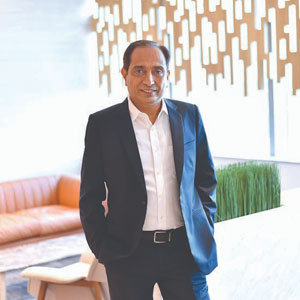
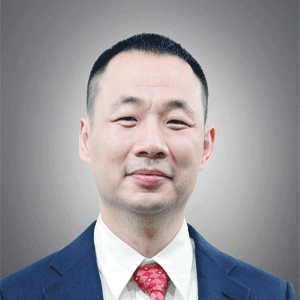


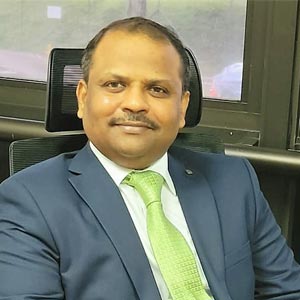
Daniel Suraboyini, Head Global Chief Information Officer, Information Technology, SIPEF
Daniel Suraboyini currently works as the Head Global Chief Information Officer, Information Technology Group at SIPEF. He has over 20 years of experience as a global IT leader for MNCs. As a recognized leader, Daniel builds/grows talents and establishes industry best practices and executes major transformational IT change initiatives and organizational change management with an extensive technical background that validates technology solutions and works well with all the stakeholders.
What are some of the pain points in the unified communication space today?
Many tools available on the market right now, such as Teams, Zoom, and Google Meet, make it easy for people to connect with one another. However, from the standpoint of unified communication, what these tools lack is that they are not integrated with one another. Doing this will enable effective communication.
What are some of the technological advancements impacting this space?
The advancement of technology has a great impact on unified communication. For instance, in the past, a telephone system had to be on our office desk in order to communicate. However, with tools such as Microsoft Teams, we no longer require a server set or physical telephone. We can simply connect to Microsoft Teams, which has an integrated telephone system, and communicate with people inside and outside organizations while sitting anywhere in the world.
What are some of the recent projects you have been working on?
In my experience working in a variety of industries, the financial, manufacturing, and aviation sectors always strive to outperform one another when it comes to IT. They want to be at the cutting edge of technology, which can help them increase productivity and efficiency to have a happy customer, both internal as well as external. However, in a field like agriculture, people hardly mind if their computer or the IT setup is down. After I started working with SIPEF, in order to make the company compliant with the global standards, I introduced three programs named seed program, plant program and fruit program.
Using the seed program, my first initiative is to modernize IT so that all employees have access to a common digital workspace and work from anywhere, with secure communication and real-time collaboration. Secondly, in the agriculture sector as we currently lack proper systems and even have some systems that are extremely old. Using an advanced system, my focus is to digitize the plantation industry's core operations, such as seed plating, vehicle management, nursery management etc. and also the back office operation where sales, distribution, and production planning take place. Moreover, being in the plantation industry, we have roughly 25,000 people working for whom we provide housing, healthcare, and education for the kids. So it's crucial for us that all these activities are monitored. We are aiming to implement new systems that will provide an end-to-end solution.
In the future, we intend to employ drones to assess how much land we are using and whether or not we still have any remaining. As if the land is available, we can do plantation there in order to increase output. This will also help to monitor the health of the plants and determine whether everything is in order and the information is correct.
Moving forward with the more use of AR, VR and AI, unified communication space is going to be wider and the driving force in the coming decade.
What would be your piece of advice for budding professionals in the field?
To be effective, it's crucial to visit the site, grasp the problem firsthand, conduct thorough research and then design a solution or a system that will benefit both the internal and external customers. For example, while I was working for the Emirates Group, the aviation industry was very well advanced, and the networks were strong compared to the current industry I am in. When I joined this company, I realized though I had done the same work in my previous company, the industries are entirely different. I had to spend time understanding the ground reality, know the people and situations and then start working. For two months, I traveled across all four continents to understand the challenges and needs and to design a system where the entire group could come onto a single platform and work.

