

A featured contribution from Leadership Perspectives: a curated forum reserved for leaders nominated by our subscribers and vetted by the Construction Tech Review Advisory Board.

ABB Australia
Smart Solutions to Energize Smart Cities
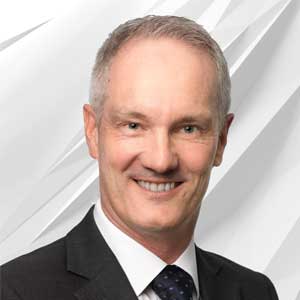
Bernard Norton
The emergence of HVDC technology heralds a sea of change in the way electricity is transmitted over long distances, offering numerous benefits over the more prevalent alternating current (AC) transmission systems
There is no doubt that renewables represent a cleaner and cheaper alternative to burning fossil fuels to generate power, but there are challenges in distributing renewable energy, such as solar, hydro or wind power, which are produced at plants located at remote areas, exposed to extremes of the environment and have intermittencies.
As the push towards more renewable sources of energy gathers momentum around the world, questions have been raised about how to make grids more flexible and better accommodate intermittent generation. High voltage direct current (HVDC) technologies and smart electric microgrids should be part of the answer.
HVDC: A superhighway for Renewables
The need for more efficient and flexible electricity transmission systems is part of the discussion while planning Smart Cities. The emergence of HVDC technology heralds a sea of change in the way electricity is transmitted over long distances, offering numerous benefits over the more prevalent alternating current (AC) transmission systems.
Providing an electricity superhighway for remote renewable projects, HVDC offers much lower power losses, regardless of the distance that the electricity travels. Slated to be worth over US$ 12 billion in the next five years, HVDC transmission systems represent the most efficient transmission to far-flung islands, and even across continents.
HVDC lines are expediting renewables in three ways- interconnecting existing power plants, connecting new solar and hydro power stations, and integrating offshore wind energy projects.
HVDC transmission enables large-scale integration of renewable power resources in interconnected, reliable and flexible smart grids to serve upcoming Smart Cities.
Here in Australia, upgrades of historic Murraylink and the Directlink transmission connections is securing future power reliability and energy exchange. The Directlink transmission system was commissioned in 2000 and marked the first interconnection of the regional electricity markets of the Australian states of New South Wales and Queensland.
Two years later, the 180-kilometer Murraylink transmission system became the world’s longest underground HVDC power transmission system when it was put into service, connecting the states of South Australia and Victoria.
Underground cables were chosen for Murraylink instead of overhead transmission lines to minimize visual and environmental impact. The cables were drilled under the iconic Murray River, road, and rail crossings, and several significant Indigenous Australian heritage sites.
Central to the both upgrades were based on HVDC technology, pioneered by ABB more than 60 years ago. By monitoring, controlling and protecting the sophisticated technology in the converter stations, the system ensures reliability and efficiency, while extending equipment life spans.
Microgrid: A Key Element in a Smart Future
Microgrids are gaining popularity and it’s easy to see why. Between extreme weather-induced power outages seen recently across the globe and the rise of distributed energy resources (DERs), nations are planning a dramatic transformation in the way we produce and consume energy.
Many experts are mentioning Microgrids as key to this transformation. Microgrids are small-scale, self-sustaining power networks that typically operate synchronously with the traditional centralized grid but can disconnect and sustain operations autonomously when needed.
With today’s high proliferation of small-scale energy resources, such as domestic solar arrays and batteries, microgrids empower end users to control their energy mix, as well as freedom from the bureaucratic maze of a power utility.
In Australia, increased penetration of intermittent renewables within the power grid is adding complexity for grid operators. In South Australia, wind farms generate the bulk of the electricity with increased deployment of solar panels, both large scale and roof-top installations.
In an area with high renewable integration, the Energy Storage for Commercial Renewable Integration (ESCRI) project in South Australia has strengthened the power grid and improved power reliability by connecting large-scale battery banks to transmission system.
The project not only enables value stacking of storage in a regulated energy market, but also provides faster response to help balance the network daily and support the increased power transfer with the interconnectors to Victoria.
In an event of a transmission line outage, the islanded microgrid can utilize the existing wind farm and distributed rooftop solar arrays, to provide uninterrupted power supply to nearly 400 homes for at least 24 hours.
Modern technologies and new energy solutions have created new expectations for grids serving tomorrow’s smart cities. As they grow in number, microgrids and HVDC, working in tune with sophisticated digital automation and smart management, hold immense potential to seamlessly serve us with reliable and clean energy.
Here in Australia, upgrades of historic Murraylink and the Directlink transmission connections is securing future power reliability and energy exchange. The Directlink transmission system was commissioned in 2000 and marked the first interconnection of the regional electricity markets of the Australian states of New South Wales and Queensland.
Two years later, the 180-kilometer Murraylink transmission system became the world’s longest underground HVDC power transmission system when it was put into service, connecting the states of South Australia and Victoria.
Underground cables were chosen for Murraylink instead of overhead transmission lines to minimize visual and environmental impact. The cables were drilled under the iconic Murray River, road, and rail crossings, and several significant Indigenous Australian heritage sites.
Central to the both upgrades were based on HVDC technology, pioneered by ABB more than 60 years ago. By monitoring, controlling and protecting the sophisticated technology in the converter stations, the system ensures reliability and efficiency, while extending equipment life spans.
Microgrid: A Key Element in a Smart Future
Microgrids are gaining popularity and it’s easy to see why. Between extreme weather-induced power outages seen recently across the globe and the rise of distributed energy resources (DERs), nations are planning a dramatic transformation in the way we produce and consume energy.
Many experts are mentioning Microgrids as key to this transformation. Microgrids are small-scale, self-sustaining power networks that typically operate synchronously with the traditional centralized grid but can disconnect and sustain operations autonomously when needed.
With today’s high proliferation of small-scale energy resources, such as domestic solar arrays and batteries, microgrids empower end users to control their energy mix, as well as freedom from the bureaucratic maze of a power utility.
In Australia, increased penetration of intermittent renewables within the power grid is adding complexity for grid operators. In South Australia, wind farms generate the bulk of the electricity with increased deployment of solar panels, both large scale and roof-top installations.
In an area with high renewable integration, the Energy Storage for Commercial Renewable Integration (ESCRI) project in South Australia has strengthened the power grid and improved power reliability by connecting large-scale battery banks to transmission system.
The project not only enables value stacking of storage in a regulated energy market, but also provides faster response to help balance the network daily and support the increased power transfer with the interconnectors to Victoria.
In an event of a transmission line outage, the islanded microgrid can utilize the existing wind farm and distributed rooftop solar arrays, to provide uninterrupted power supply to nearly 400 homes for at least 24 hours.
Modern technologies and new energy solutions have created new expectations for grids serving tomorrow’s smart cities. As they grow in number, microgrids and HVDC, working in tune with sophisticated digital automation and smart management, hold immense potential to seamlessly serve us with reliable and clean energy.
The articles from these contributors are based on their personal expertise and viewpoints, and do not necessarily reflect the opinions of their employers or affiliated organizations.
