

APAC CIOOutlook
About UsConferencePartner With Us
  • Technologies
    • Blockchain
      Data Intelligence and Management
      Digital Transformation
      FinTech
      Generative and Agentic AI
      Low Code No Code
      Mobile Application
      Networking
      Robotics
      Storage
      Wireless
  • Industries
    • Automotive
      Aviation
      Banking
      Construction
      E-Commerce
      Food and Beverages
      Healthcare
      Insurance
      Logistics
      Manufacturing
      Retail
      Supply Chain
      Travel and Hospitality
  • Platforms
    • Microsoft
      Salesforce
      SAP
  • Strategic Solutions
    • Business Intelligence
      Contact Center
      Corporate Finance
      CRM
      Cyber Security
      Data Center
      Enterprise Asset Management
      Enterprise Performance Management
      IT Infrastructure and Services
      Managed Services
      Procurement
      Unified Communication
      Workflow
  • Home
  • CXO Insights
  • Leadership Perspectives
  • Innovation Insights
  • Research
  • News
  • Whitepapers
  • CXO Awards
#

Apac CIOOutlook Weekly Brief

×

Be first to read the latest tech news, Industry Leader's Insights, and CIO interviews of medium and large enterprises exclusively from Apac CIOOutlook

Subscribe

loading

THANK YOU FOR SUBSCRIBING

A featured contribution from Leadership Perspectives: a curated forum reserved for leaders nominated by our subscribers and vetted by the Construction Tech Review Advisory Board.

Zebra Technologies

George Pepes, APAC Healthcare Solutions Lead

The Prescription for a Revolution in Healthcare
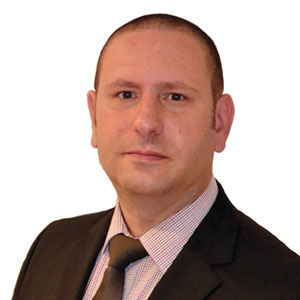
George Pepes

George Pepes

Technology can, on occasion, be hyped. Gartner even has a methodology for it: The Hype Cycle. But when it comes to the hot topic of now, the Internet of Things (IoT), all talks justified: we believe that IoT will transform the way we work across many sectors.

In the healthcare field, IoT describes an environment where smart labels (e.g. barcodes and radio frequency identification (RFID) tags) and sensors fixed to objects, and linked to the internet; give those objects a digital voice. Sensors and barcodes can be attached to pretty much any item—clinicians, patients, vehicles, equipment, medicines— and with these items transmitting streams of data, for example with their location, insight is provided about every corner of the hospital, in real time.

By enabling the sensing and analysing the data collected in real-time, it leads to actions that are more in tune with what is going on at that point in time. This allows us to rethink the way we work in healthcare.

Better Ways of Working

Many healthcare processes are based around manual workflows: workflows that involve paper records and manually entering data using keyboards. In high-pressure environments, this creates the scope for error and, with 98,000 deaths in the US alone attributed to medication errors; IoT offers safer and better ways of working. Here are three examples:

• Medication management: Take a nurse giving medication to a patient.

By giving the patient a ble wristband, the wristband can be scanned by sensors as the patient moves through treatment phases

At the patient’s bedside they can use a mobile computer to scan the patient’s ID bracelet. This will confirm the patient’s name (which the nurse can verify verbally) and bring up their medical record. The computer will provide a guided workflow with any instructions for administering the drug. The nurse can also scan the barcode on the drug packet to cross-check that the patient has no allergy to it. The computer is then used to confirm that the medication has been taken, with a note auto-created on the patient’s Electronic Health Record including the drug, time, date, and ID of the nurse. This effectively allows for nursing staff to provide the right care, to the right patient, at the right time.

• The critical hour: In critical cases time is of the essence. For example, with angioplasty surgery the goal might be to have the patient operated on within 60 minutes. By giving the patient a BLE wristband, the wristband can be scanned by sensors as the patient moves through treatment phases. If their progress slows, alarms can be automatically raised with senior clinicians who can intervene. In doing so, the hospital can also collect data that can assist them to streamline the patients’ journey.

• Wrong blood in tube: Despite everyone’s best efforts, mistakes happen when taking blood in busy wards. By using mobile computers and printers, these critical errors can be avoided. Nurses can use mobile computers to view what tests are needed, scan a patient’s wristbands to confirm their ID, be guided through the blood collection process, and print barcode labels that are fixed to the sample. All of this takes place at the bedside, which we all know is vital to ensure that errors are avoided. The barcode ensures that the vial is always identified correctly and it can be tracked across the sample workflow—from the ward, to transit to the lab, and then into the lab itself.

There are many other ways that IoT will advance healthcare: from always knowing where your teams are in hospitals to ensure they can reach a critical patient quickly, to tracking every piece of equipment— everywhere, and holding the right amount of stock in your pharmacy—always.

Data: The Currency of Improvement

IoT collects data from across your operations: data that can become the currency of improvement. Because, by using Big Data systems to uncover trends, you can continually revise workflows and even isolate ways to improve diagnosis, care, and treatment.

As we look forward, IoT is our number one prescription to advance the way our clinicians work, to support them with more intuitive technology, and, ultimately, to enhance patient care.

The articles from these contributors are based on their personal expertise and viewpoints, and do not necessarily reflect the opinions of their employers or affiliated organizations.
The Leadership Perspectives forum brings together voices shaping construction technology and innovation. Participation is by invitation only. It features leaders who are not merely observing technological change, but actively contributing to it through digital transformation and execution-driven insights.
EDITOR'S CHOICE
  • Willis Towers Watson

    ISS Facility Services Australia & New Zealand

    The Right Technology And Reliable Partners; The Business Next Frontier

    Luke O'Brien, CIO

  • Willis Towers Watson

    BPAY Group

    Building BPAY Group's New Digital Foundation

    Angela Donohoe, Chief Information Officer

  • Willis Towers Watson

    Bvn Architecture

    How Have Recent Advancements in Big Data Been Impacting Businesses?

    Marc Solomon, CIO

  • Willis Towers Watson

    Tassal Operations

    BI & Analytics in Aquaculture

    Matthew Leary, CIO

I agree We use cookies on this website to enhance your user experience. By clicking any link on this page you are giving your consent for us to set cookies. More info

APAC CIOOutlook
Follow on LinkedIn

About

  • Home
  • About Us
  • Partner With Us

Stay Connected

  • Subscribe
  • Newsletter
  • Sitemap

Contact Us

  • editor@apacciooutlook.com
  • sales@apacciooutlook.com
  • marketing@apacciooutlook.com

Legal

  • Editorial Policy
  • Privacy Policy
  • Terms of Use

© 2026 APAC CIOOutlook. All rights reserved. Headquarteblue in Fort Lauderdale, FL, USA.

This content is copyright protected

However, if you would like to share the information in this article, you may use the link below:

https://www.apacciooutlook.com/views/the-prescription-for-a-revolution-in-healthcare-nwid-5365.html