









APAC CIOOutlook
About UsConferencePartner With Us
  • Technologies
    • Blockchain
      Data Intelligence and Management
      Digital Transformation
      FinTech
      Generative and Agentic AI
      Low Code No Code
      Mobile Application
      Networking
      Robotics
      Storage
      Wireless
  • Industries
    • Automotive
      Aviation
      Banking
      Construction
      E-Commerce
      Food and Beverages
      Healthcare
      Insurance
      Logistics
      Manufacturing
      Retail
      Supply Chain
      Travel and Hospitality
  • Platforms
    • Microsoft
      Salesforce
      SAP
  • Strategic Solutions
    • Business Intelligence
      Contact Center
      Corporate Finance
      CRM
      Cyber Security
      Data Center
      Enterprise Asset Management
      Enterprise Performance Management
      IT Infrastructure and Services
      Managed Services
      Procurement
      Unified Communication
      Workflow
  • Home
  • CXO Insights
  • Leadership Perspectives
  • Innovation Insights
  • Research
  • News
  • Whitepapers
  • CXO Awards
#

Apac CIOOutlook Weekly Brief

×

Be first to read the latest tech news, Industry Leader's Insights, and CIO interviews of medium and large enterprises exclusively from Apac CIOOutlook

Subscribe

loading

THANK YOU FOR SUBSCRIBING

  • Home
Editor's Pick (1 - 4 of 8)
left
From a Traditional to a Digital Mindset, and the Impact on IT

Hubert Van Dalen, Chief Information Officer, Service Stream

The Global Technology Revolution

Anthony G. Dupree, Chief Information Officer & CISO, Novitex Enterprise Solutions

5 Signs it's Time to Rethink your Social Strategy

Andrew Wilson, CIO, Accenture

Nexus of forces Technology Trend for Business Productivity

Umesh Mehta, Sr. VP & CIO, India, Jubilant Life Sciences

CIOs must step into the Domain of Business Transformational Leadership

Thaddeus Arroyo, CIO, AT&T

Readying your Application to Beat the Bargain Hunting Crowd

Mohan Veloo, Vice President, Technology, APAC, F5 Networks

Map Your Success...

Tom Leyden, Global Leader of IT, Woods Bagot

Servicenow Digitized Auckland Council

Mark Denvir, Director of ICT, Auckland Council

right

The Role of Edge Computing in 5G Technology

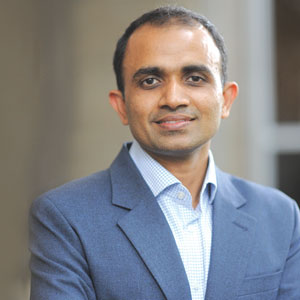
Jaheer Abbas, Senior Director Se Asia & India, Limelight Networks
Tweet
content-image

Jaheer Abbas, Senior Director Se Asia & India, Limelight Networks

5G technology holds the great promise of delivering data significantly faster, unparalleled device connectivity and reduced latency – all of which are critical factors as user expectations evolve from consistent high-quality digital experiences to greater connectivity and real-time experiences – such as interactive video and gaming – as a result of the increased bandwidth.

At the same time, improved device connectivity will mean more data consumption and a greater need for real-time analysis. In such instances, milliseconds matter.Whether it is real time communication between people or the processing of critical data, responsive connectivity is the key.

While traditional cloud computing excels at performing complex computations, sending data from each device to traditional cloud data centres for ingest and processing is simply too slow for real time workflows.A centralised cloud architecture cannot keep up with the real-time responsiveness demanded by 5G technology. We therefore need to address latencies created as a result of the distance between the application in the data centre and the user or data source can create significant latencies.Moving processing power from a central location to the edge of the last-mile networks is critical to success.

The solution: edge computing, a new architecture that addresses this key challenge.

A New Architecture to Meet This Demand

Edge computing offers the transformative opportunity for businesses to improve data acquisition latency, and thus, users’ digital experiences, by moving processing power from a central point to the network “edge” closer to the source, or more specifically, next to the last-mile internet connection. Data no longer has to wind its way through the internet back to a central location that, in most cases, is not close to the device or user.

It eliminates the cost, complexity, and latency of utilising traditional cloud computing environments to deploy global applications, create digital content, and process real time IoT and sensor data.

The Rise of Edge Computing in Action

The plethora of connected devices incorporating IoT sensors generate vast amounts of data but finding business or operational value in that data is extremely challenging and requires a great deal of analysis. This is further compounded by the need for real-time experiences which requires minimal delay between data receipt and processing, making edge computing all the more vital. Edge computing makes it possible to quickly processes data from sensors to filter and analyse it in real time. It can then send out alerts for things that require immediate attention, filter out the “junk” data to reduce the amount of bandwidth used and data that needs to be stored, or identify patterns quickly, allowing faster response to issues.

As internet-connected devices continually acquire data, the data centre at the edge performs these functions and all of the data is sent to the central processing or storage repository in the data centre. The edge compute platforms can then perform immediate analysis, and ensure actions take place in time to impact change. This will be a critical scale component to the adoption of 5G, and the answer to transitional needs for performance-sensitive, IoT devices.

Edge Computing for 5G

With the rise of autonomous vehicles, smart homes, and numerous other high-bandwidth digital experiences, speed is of the essence. Current 4G networks are not able to match up to the rate at which new connected devices are being added to the ecosystem, but 5G will not be able to meet the performance needs of low latency without edge computing.

The implementation of 5G is still in its infancy, having been deployed in only a few highly markets globally. Nonetheless, edge computing has proven that it has a key role to play in enhancing the value of 5G networks, by providing a means to process, filter, and even protect data locally.

The enhanced value of the edge computing and 5G combination includes reduced costs of cloud storage and processing, the ability to run more applications at the edge, and the ability to remotely control and manage edge assets.

Towards Sub-Second Response and Improved Customer Experiences

Edge computing offers a powerful new solution for applications that demand sub-second response times. By putting the compute power at the edge of the network, network operators can dramatically reduce latency and significantly improve users’ digital experiences.

To increase efficiency, reduce unplanned downtime, improve customer experiences, and drive innovation, network operators need a new architecture that has the local capacity to securely and reliably ingest all of this data, no matter where it is being generated or consumed.

On the other hand, the biggest benefit for consumers would be a noticeable increase in the response of the network, due to the reduction in latency. This could very well change the game for digital-first businesses that rely on high-speed content delivery.

By turning to the right edge cloud services, network operators can easily leverage the benefits of a high-performance edge compute solutions and focus on developing their 5G solutions rather than building out a network.

tag

IoT

Cloud Computing

Sensor

Weekly Brief

loading
Top 10 IT Infrastructure Solution Companies - 2019
Featured Issue

I agree We use cookies on this website to enhance your user experience. By clicking any link on this page you are giving your consent for us to set cookies. More info

APAC CIOOutlook
Follow on LinkedIn

About

  • Home
  • About Us
  • Partner With Us

Stay Connected

  • Subscribe
  • Newsletter
  • Sitemap

Contact Us

  • editor@apacciooutlook.com
  • sales@apacciooutlook.com
  • marketing@apacciooutlook.com

Legal

  • Editorial Policy
  • Privacy Policy
  • Terms of Use

© 2026 APAC CIOOutlook. All rights reserved. Headquarteblue in Fort Lauderdale, FL, USA.

This content is copyright protected

However, if you would like to share the information in this article, you may use the link below:

https://www.apacciooutlook.com/views/the-role-of-edge-computing-in-5g-technology-nwid-6947.html