









APAC CIOOutlook
About UsConferencePartner With Us
  • Technologies
    • Blockchain
      Data Intelligence and Management
      Digital Transformation
      FinTech
      Generative and Agentic AI
      Low Code No Code
      Mobile Application
      Networking
      Robotics
      Storage
      Wireless
  • Industries
    • Automotive
      Aviation
      Banking
      Construction
      E-Commerce
      Food and Beverages
      Healthcare
      Insurance
      Logistics
      Manufacturing
      Retail
      Supply Chain
      Travel and Hospitality
  • Platforms
    • Microsoft
      Salesforce
      SAP
  • Strategic Solutions
    • Business Intelligence
      Contact Center
      Corporate Finance
      CRM
      Cyber Security
      Data Center
      Enterprise Asset Management
      Enterprise Performance Management
      IT Infrastructure and Services
      Managed Services
      Procurement
      Unified Communication
      Workflow
  • Home
  • CXO Insights
  • Leadership Perspectives
  • Innovation Insights
  • Research
  • News
  • Whitepapers
  • CXO Awards
#

Apac CIOOutlook Weekly Brief

×

Be first to read the latest tech news, Industry Leader's Insights, and CIO interviews of medium and large enterprises exclusively from Apac CIOOutlook

Subscribe

loading

THANK YOU FOR SUBSCRIBING

  • Home
  • Data Center
Editor's Pick (1 - 4 of 8)
left
Hybrid IT - The New Reality

Ramesh Munamarty, Group CIO, International SOS

Faster, Safer Data Hosting Starts with a Map

Mark Bauer, Managing Director & Co-Lead Of The Data Center Solutions, JLL

Universal Digital Identity-How to Get it Right?

Dr. Michael Gorriz, Group CIO, Standard Chartered Bank

Data Center of the Future

Ari Bose, CIO, Brocade

Centricity of Data Science in the IT World

Harpreet Kaintel, CIO, ZenithOptimedia Group

Encryption-is it enough?

Jerry Irvine, EVP, CIO, Prescient Solutions

The Evolution of Enterprise AI: Balancing Innovation, Governance and Business Value

Ashley Wan, Regional Data & Analytics Director, Apac, Richemont

Will AI Replace Lawyers?

Ker Shing Chock, Head of Legal & Compliance, DBS Bank Ltd. Malaysia

right

The Triple Bottom Line and Data Centers

Rob Nash-Boulden, Director, Data Centers, Black & Veatch

Tweet
content-image

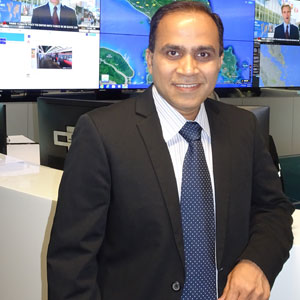
Rob Nash-Boulden, Director, Data Centers, Black & Veatch

Corporate social responsibility and sustainability are frequently discussed in business management circles as executives are called upon to account for their decisions regarding a wide range of daunting, complex challenges – from climate change and resource scarcity to rising economic, political and social inequity.

This is especially true in the technology industry and among data center owner/operators, who are viewed as leading agents of socio-economic disruption and change. Building on their efforts to date, data center decision makers operators can benefit by adopting a “triple bottom line” (3BL) approach that raises strategic social and environmental issues and performance to the same level as economic and financial results.

Energy is the single largest recurring cost that data center operators incur. Moreover, the decisions they make regarding energy sources and use have and will continue to have profound impacts on society and the environment, the two other pillars of 3BL business management.

There is still some low hanging fruit remains when it comes to data centers, energy, and realizing triple bottom line returns. I will highlight just three here:

1. Reducing thermal buffers and raising data center room temperatures with a minimum goal of compliance with ASHRAE 90.4 (Rev. 2016) standards for temperature and humidity while moving towards dynamic cooling environments;

2. Reducing under-utilization of servers to zero, or as near as technically and responsibly feasible;

3. Migrate from Hard Disk Drives (HDD) to Solid State Drives (SSD).

Many organizations including the Infrastructure Masons, and numerous data center operators operate at Power Utilization Effectiveness (PUE) of 1.2 or less.
Data center operators can reduce, or possibly even eliminate, thermal barriers by using varying mixes of warm water, outside air and hot/cold aisle containment. This can be carried out while moving towards dynamic cooling environments, the results of which results in improved water and energy efficiency, cost savings and reduction of carbon emissions.

SLA’S Are Indeed A Key And That Is Now Combined With A Strong Shift Toward Requiring Renewable Energy Generation And A Willingness To Pay (A Little) Extra For That

Fan energy and numerous factors need to be considered, but research has shown that raising data center operating temperature by just 2 degrees Fahrenheit (1.2ºC) can reduce energy use by as much 10 percent. That can have beneficial impacts across all three principal facets of 3BL business management, improving human and environmental health and quality while reducing operating costs at the same time.

Stipulations in existing contracts (Service Level Agreements) are one of the hurdles that often must be overcome. Beyond this, success can be achieved by accelerating migration to cloud compute, cloud storage, and cloud-based disaster recovery. In addition to higher energy efficiency and cost savings, moving along this path opens up the opportunity to launch or expand pay-for-use computing and cloud or “edge” computing services that provide an additional source of revenue for operators further encouraging the shift toward efficiency.

Idle or underutilized servers use between 50-65 percent of the energy of fully utilized servers. Public, private and hybrid cloud services provide simple and cost-effective ways for data center owners and operators to achieve 3BL goals cost-effectively.

Research has shown that a typical 2U rack mount server consumes 425 watts of electricity during operation. Assuming an energy cost of $0.10 per kilowatt-hour (kWh), it is possible to save $400 of electricity per year per 2U server by virtualizing or shifting workloads to the cloud. Factor in the energy savings reductions in the cooling for these servers at a PUE of 2.0 and the savings double to $800.

Separating compute and processing from storage while accelerating migration from magnetic hard disk to solid-state storage is another way that positive social and environmental, as well as financial, bottom line gains can be realized. Non Volatile Memory express is a SSD specific protocol that allow parallel I/O with better bandwidth and lower latency than SATA and should be considered.

There is a lot more to discuss regarding these three simple suggestions, and even more regarding how data center owners and operators can craft and successfully implement strategic 3BL business plans and programs.

The strong trend towards greater corporate social responsibility and environmental commitments coupled with economics and sustainability are clear and firmly entrenched. 3BL business management methods and best practices offer data center owners and operators, as well as organizations of all types, a conceptual, data-driven means of guiding and informing their goals and decision-making in order to do “right” by investors, employees and society in the broadest sense.
tag

Financial

Energy Efficiency

Renewable Energy

Weekly Brief

loading
Data Center Cooling Solution Company of the Year in APAC - 2025
Featured Issue
Previous Next

I agree We use cookies on this website to enhance your user experience. By clicking any link on this page you are giving your consent for us to set cookies. More info

APAC CIOOutlook
Follow on LinkedIn

About

  • Home
  • About Us
  • Partner With Us

Stay Connected

  • Subscribe
  • Newsletter
  • Sitemap

Contact Us

  • editor@apacciooutlook.com
  • sales@apacciooutlook.com
  • marketing@apacciooutlook.com

Legal

  • Editorial Policy
  • Privacy Policy
  • Terms of Use

© 2026 APAC CIOOutlook. All rights reserved. Headquarteblue in Fort Lauderdale, FL, USA.

This content is copyright protected

However, if you would like to share the information in this article, you may use the link below:

https://www.apacciooutlook.com/views/the-triple-bottom-line-and-data-centers-nwid-7744.html