

A featured contribution from Leadership Perspectives: a curated forum reserved for leaders nominated by our subscribers and vetted by the Construction Tech Review Advisory Board.

Kerry
Trends in the Procurement Space
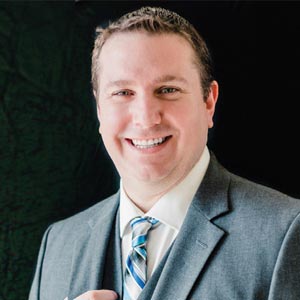
Interview with Brian Holbrook
Brian Holbrook is an indirect procurement leader with a diverse background across multiple industries with both regional and global organizations. He brings engineering to the world of sourcing and procurement, ensuring cross-functional engagement with technical groups. Holbrook has a broad range of procurement experience, with category leadership roles in CAPEX, MRO, IMAS, transportation, logistics, facilities management, external manufacturing, corporate services, metals, aggregates, and retail products.
As the Director of Indirect Procurement in Kerry, Holbrook leads a team of category managers and buyers with accountability for sourcing more than 700 million indirect and third-party manufacturing spend. He is also instrumental in driving the development of the team and best procurement practices, including sourcing strategy definition, deployment, and stakeholder and supplier development to maximize total value contribution.
In the interview, Brian Holbrook highlights the current trends in the procurement space and what the future holds for the professionals in the field.
In the light of your experience, what are the trends and challenges you’ve witnessed with respect to the procurement space?
On the challenges side of it, we are experiencing the fallout of a hyper-globalized supply chain that has caused significant, sustained disruption around the world. Procurement practitioners are experiencing a never-ending list of challenges—both in availability and cost control of the goods they are responsible for managing. This volatility has upended many existing category strategies the procurement team might have had in place, along with the associated sourcing calendars and cadences.
-
Procurement Teams will Prioritise Digitization, Sustainabilit Y, Strategic Sourcing, Vendor Partnerships, and Vendor Risk Management During 2023.
The change in environment has also led to a substantial increase in tension placed on the procurement function. It has also elevated the profile of the profession. Most organizations are enhancing the capabilities of their procurement team, or if they do not have a procurement team, they are actively seeking to build one. As part of the trend, companies are investing in additional capability on the functional side with more headcount or increasing the skill sets and tools that the teams require.
It is also the first time that procurement as a career has become mainstream. There is now an increased awareness of what procurement is and the procurement professionals' job roles are. The increased attention has also led to companies competing for a very finite and scarce pool of experienced talent. Now, the challenge for procurement professionals is to effectively leverage the right resources to fill the gaps, up-skill the team, and position themselves in the procurement space.
Could you elaborate on some of the projects or initiatives that you’re currently overseeing?
Some of the most interesting projects that procurement teams work on are the ones that help deliver against company’s strategic priorities.
One such initiative is Beyond The Horizon, which ties the company’s ESG goals with sustainability goals. For my team, this project involves optimizing waste streams in our network and setting the prep work for a path toward zero waste to landfill, contracting, and devising a strategy of how to go hundred percent renewable on energy, as well as maximizing this project footprint. We aim to minimize the cost and add greater visibility to projects supporting scope one and two emission reduction. Through this initiative, I saved my company around 2 million dollars while meeting our organizational goals and supporting the planet.
What are the strategic points that you go by to steer the company forward?
As with most procurement organizations, we are continually trying to enhance our functions— connectivity with the business stakeholders and aligning our team structure and initiatives with the company’s priorities.
We are tweaking the organizational structure of our team by creating specific roles that are to give focus to priorities that maybe didn’t have a direct tie into our team, as well as emphasizing the role of what we call champions within our group. We have business unit champions within the procurement team that have a scope of participating and representing our function in different business units. That is part of what we’re doing as a leadership team to evolve our function beyond just hitting KPIs and targets into becoming a trusted business partner for the company.
Can you draw an analogy between your personality traits, and hobbies and how they reflect on your leadership strategy?
Like many people leaders, I’ve read a number of theories and texts on management and have attended a number of classes for the same. Kerry also has a very good leadership development program that has a curriculum for helping enhance the skill of people leaders. But, in practice, I’ve found that leadership, in my world, is all about people.
My personality lends itself to being a reserved person. I’m very empathetic as I pay attention to listening and relating to people and understanding their needs. These qualities, when it comes to aligning with business stakeholders and cross-functional partnerships, help me excel.
One of the frequently asked questions to procurement professionals is if they view their job as art or science-related. If you look at any supply chain program at a university, it is definitely more of a science. However, I am a lifelong musician with a passion for various instruments. So I consider myself an artist even in my current job role though my educational qualification is in Engineering. The scientific backing along with an inclination to the arts has helped me a lot.
How do you see the evolution of the procurement arena a few years from now with regard to some of its potential disruptions and transformations?
With the enhanced procurement functions profile, the demand for experienced leaders in the space is going to grow. For many organizations, this will lead to leadership changes at the function level and will substantially change the structure of those teams.
We are Experiencing the Fallout of a Hyper-Globalized Supply Chain that has Caused Significant, Sustained Disruption Around the World
Also, the long-touted digitization of procurement has accelerated at great speed in the last few years. With more organizations undergoing digitization, we are going to see the impact and result of having more sophisticated capabilities like procurement suites versus relying on a mix of ERP systems as your source of data. The change is going to give more visibility to procurement practitioners, as well as enhance their ability to sort through large amounts of data. The digital transition and the related tools also demand skill sets and structured approaches while managing it.
What would your advice be to your fellow peers or aspiring professionals in the field of procurement?
My advice to everyone would be to view every opportunity as an occasion for learning opportunity. If I could go back in time, I’d have explored learning more categories and tackling a wider range of projects earlier on in my career.
It is very important to strike a balance between being a strong subject matter expert, somebody who has managed a specific category for a number of years, and being somebody who has general expertise that is stretched across a bunch of categories without great depth.
So if anytime you have the opportunity to even temporarily learn a new category or deliver on a project outside your space, seize those opportunities and make the most of them because that’s how you build your capability and skill set.
