



APAC CIOOutlook
About UsConferencePartner With Us
  • Technologies
    • Blockchain
      Data Intelligence and Management
      Digital Transformation
      FinTech
      Generative and Agentic AI
      Low Code No Code
      Mobile Application
      Networking
      Robotics
      Storage
      Wireless
  • Industries
    • Automotive
      Aviation
      Banking
      Construction
      E-Commerce
      Food and Beverages
      Healthcare
      Insurance
      Logistics
      Manufacturing
      Retail
      Supply Chain
      Travel and Hospitality
  • Platforms
    • Microsoft
      Salesforce
      SAP
  • Strategic Solutions
    • Business Intelligence
      Contact Center
      Corporate Finance
      CRM
      Cyber Security
      Data Center
      Enterprise Asset Management
      Enterprise Performance Management
      IT Infrastructure and Services
      Managed Services
      Procurement
      Unified Communication
      Workflow
  • Home
  • CXO Insights
  • Leadership Perspectives
  • Innovation Insights
  • Research
  • News
  • Whitepapers
  • CXO Awards
#

Apac CIOOutlook Weekly Brief

×

Be first to read the latest tech news, Industry Leader's Insights, and CIO interviews of medium and large enterprises exclusively from Apac CIOOutlook

Subscribe

loading

THANK YOU FOR SUBSCRIBING

  • Home
Editor's Pick (1 - 4 of 8)
left
Artificial Intelligence-Journey towards the Center of the Enterprise

Raman Mehta, SVP & CIO, Fabrinet [NYSE: FN]

Mastering Technology Selection for Competitive Advantage

Rob Meilen, VP & CIO, Hunter Douglas

Healthcare IT solution Delivery and the Cloud

Arvind N Sivaramakrishnan, CIO, Apollo Hospitals

AI-Driven Intelligent Maintenance Trends in the Industrial Space

ChengzhiZong, Vice President of Artificial Intelligence, RONDS

Riding the Wave of Digital Transformation for MSME’s

SharlizaBintiMohdHaris, Head, SME Value Propositions, Solutions and Campaigns, unifi Business, Telekom Malaysia

Using AI to Empower Clinicians, Patients, and Healthcare Organizations

Dr. Yau Teng Yan, Chief Medical Officer, Holmusk

Hong Kong Science Park as an AI Hub

Dr Crystal Fok, Associate Director, MPE Cluster & Robotics Platform, Hong Kong Science and Technology Parks Corporation

E - Health - Unlocking the Pathway to Preventative Healthcare

Sashidhar Thothadri, Vice President Asia, Mobile Connectivity Solutions & Analytics & IoT Solutions, Thales

right

Will the Rise of AI make us Human Doctors an Endangered Species, or be the Next Phase of Our Evolution?

Professor Erwin Loh, Group Chief Medical Officer, St Vincent’s Health Australia
Tweet
content-image

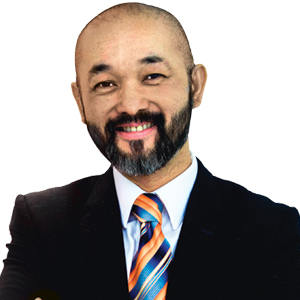
Professor Erwin Loh, Group Chief Medical Officer, St Vincent’s Health Australia

In the middle ages, doctors were physicians who practised medicine from ivory towers as intellectuals who refused to get their hands dirty, so they left the surgery to barbers, who were the practitioners who went into the battlefield to sew up wounds, amputate limbs and did the dirty, bloody operations that the doctors at the time felt were beneath their station.

How times have changed – today, surgeons are highly specialised doctors who would now argue that they are the doctors who can do surgical procedures that their physician colleagues are not credentialed or trained to carry out. The role of the doctor has changed, and will continue to change.

As a medical leader, I have a deep interest in understanding, foreseeing, and planning for such changes, so that the profession itself is not reacting, but proactively anticipating and leading the change itself. One of these potential disruptive drivers of change in medicine comes from the rise of artificial intelligence (AI) in health.

Late last year, researchers surveyed over a thousand GPs in the UK, and found that the majority of them said that AI would never replace doctors. However, more and more commentators, computer scientists, futurists and medical researchers are publishing papers predicting a seismic change in the clinical landscape, where algorithms will start automating, and replacing, a lot of the duties carried out by health professionals, including doctors.

Already, the FDA in the US has approved AI devices in radiology, ophthalmology and other areas of medicine.

AI may very well help us to remove the artificial from health, and bring back the intelligence, and even more so, the humanity

In February of this year, researchers reported in Nature Medicine that an AI algorithm outperformed junior paediatricians in diagnosing childhood illnesses (but not senior ones). In March of this year, a paper in the European Journal of Cancer found that a deep learning algorithm outperformed 136 of 157 dermatologists in classifying melanomas.

I started off this article with using surgeons as an example of doctors who have moved to the apparent peak of their profession, who can validly argue that AI will never replace the need for their hands-on surgical expertise, but recent research indicates that even surgeons are not exempt. The makers of surgical robots are already developing autonomous versions of their machines, and early experiments show that robots can cut and sew up wounds just as well as a human surgeon.

It is incumbent on the medical profession to be aware of the potential issues that the rise of AI in health can bring. We need to work with the technologists so that we can understand how and why clinical decisions are made by AI – currently, there is a “black box” that sits underneath deep learning algorithms that are not open to being deciphered easily.

Data governance is also key – the power of machine learning is in the availability of big data that is accurate, clean and free of bias. Health information privacy is paramount, and cybersecurity essential. There are also legal considerations. A lot of AI code is open source, and as we develop AI apps and software, the issue of intellectual property ownership will come up.

In addition, liability will become an issue, especially when things go wrong with AI. Who does a patient sue when a medical error occurs if a doctor relies on an AI to make a clinical decision? The European Union has even considered giving AI agents legal personhood status so the AI can be sued, a controversial idea that is still being debated in that jurisdiction.

As we approach the “singularity”, as predicted by futurists like Ray Kurzweil, it is important that we ensure that AI comes not to replace doctors, but enhances our role, so that it frees us from the more mundane and routine, to practice medicine in a more holistic, compassionate way. As experts like Eric Topol say, AI has the potential to bring us back to the heart of medicine, and free all of us to put our focus back on why we became doctors in the first place – to care for our patients.

In other words, and without irony, artificial intelligence may very well help us to remove the artificial from health, and bring back the intelligence, and even more so, the humanity.
tag

Big Data

GPS

Machine Learning

Weekly Brief

loading
Top 10 AI Powered Healthcare Companies - 2019
Featured Issue

I agree We use cookies on this website to enhance your user experience. By clicking any link on this page you are giving your consent for us to set cookies. More info

APAC CIOOutlook
Follow on LinkedIn

About

  • Home
  • About Us
  • Partner With Us

Stay Connected

  • Subscribe
  • Newsletter
  • Sitemap

Contact Us

  • editor@apacciooutlook.com
  • sales@apacciooutlook.com
  • marketing@apacciooutlook.com

Legal

  • Editorial Policy
  • Privacy Policy
  • Terms of Use

© 2026 APAC CIOOutlook. All rights reserved. Headquarteblue in Fort Lauderdale, FL, USA.

This content is copyright protected

However, if you would like to share the information in this article, you may use the link below:

https://www.apacciooutlook.com/views/will-the-rise-of-ai-make-us-human-doctors-an-endangered-species-or-be-the-next-phase-of-our-evolution-nwid-6601.html