

Top High-Performance Computing Systems in APAC 2026
High-performance computing systems help organizations process complex workloads that require advanced speed and scale. With a focus on compute capacity, workload reliability, energy efficiency and system integration, they support faster research, stronger modeling and more powerful enterprise computing.
Solutions
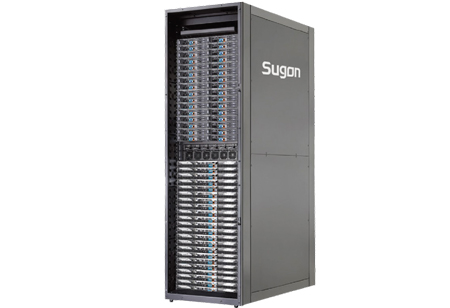
Sugon Information Industry Co., Ltd
Integrated Systems for Real-World High Performance Computing
Li Jun, President
Isolated peak metrics or theoretical benchmarks no longer define high-performance computing. Enterprises now assess how systems perform under sustained demand, how efficiently they scale across expanding workloads and how seamlessly they integrate into broader digital ecosystems. Performance is measured by consistency, with stability under pressure carrying more weight than short bursts of speed.
High-Performance Computing Systems in APAC Info
Q1
What Do Top High Performance Computing Systems Provide?
Top High Performance Computing Systems provide the computational capacity needed for workloads that exceed the practical limits of conventional enterprise infrastructure. They combine powerful processors, accelerators, memory, storage, networking and system software to process demanding workloads efficiently. Typical applications include scientific computing, artificial intelligence, engineering simulation, advanced analytics and large-scale data processing. The strongest systems are designed around workload requirements rather than raw processing speed alone. Reliability, scalability, resource utilization and sustained performance are increasingly important when infrastructure must operate continuously under demanding conditions.
Q2
What Capabilities Are Included In High Performance Computing Systems?
Top High Performance Computing Systems can encompass clustered computing platforms, accelerator-based architectures, high-speed interconnects, parallel storage and workload management software. Depending on the deployment, systems may combine CPUs with GPUs or other accelerators so different tasks can be assigned to the resources best suited to them. Monitoring, scheduling and orchestration capabilities also help administrators manage computational resources. Cooling and power management are important at higher densities, while flexible architectures can support expansion as computational requirements change.
Q3
Why Is Demand Growing For Top High Performance Computing Systems?
Demand for Top High Performance Computing Systems is being driven by the increasing complexity of artificial intelligence, simulation, modeling and data-intensive workloads. Organizations across research, engineering, manufacturing, finance, healthcare and other sectors need to process larger datasets while reducing the time required to produce useful results. AI development is also increasing demand for accelerator-rich infrastructure and scalable computing environments. Rather than relying on a single adoption driver, the category is benefiting from the broader need for faster computation, greater capacity and infrastructure that can accommodate increasingly sophisticated digital workloads.
Q4
How Are Top High Performance Computing Systems Evaluated?
Top High Performance Computing Systems needs to be assessed more than just by benchmark scores. Usually, workload performance, scalability, reliability, memory and storage design, network bandwidth, software compatibility, energy usage, and simplicity of management are the factors that organizations take into account. Controlling the output under sustained workloads can be critical for mission-critical applications. There may also be integration with existing data-center environments, cloud resources and operational processes to consider. The effective evaluation is then closely linked with the technical specifications and the actual workload requirement, infrastructure limitation and future operating aspects.
Q5
How Do Top High Performance Computing Systems Create Value?
Top High Performance Computing Systems can create value by shortening computational cycles, improving resource utilization and enabling workloads that would otherwise require impractical processing times. Faster simulations can support quicker engineering decisions, while greater computing capacity can accelerate AI development, scientific analysis and complex modeling. Efficient resource allocation can also help control infrastructure costs by reducing underutilized capacity. For organizations operating large-scale environments, predictable performance and manageable expansion can reduce operational disruption while supporting longer-term capacity planning.
Q6
What Role Does Innovation Play In Top High Performance Computing Systems?
Innovation remains central to Top High Performance Computing Systems as processor architectures, accelerators, interconnects, storage technologies and cooling methods continue to evolve. System expertise is increasingly important because performance depends on how these components work together rather than on any single specification. Advances in liquid cooling, heterogeneous computing, workload orchestration and energy-efficient infrastructure can improve performance while addressing power and thermal constraints. Service quality and technical support also matter, particularly when complex systems must be integrated, optimized and maintained throughout their operational life.
