













Greg Fallon, VP of Simulation Products, Autodesk
Today, the way products are designed and manufactured is rapidly changing, driven by the introduction of new technologies and increased product performance requirements. Companies are looking for ways to respond to the demand for lighter weight components that achieve higher performance at lower costs. The introduction of mobile and cloud technologies changes the game—with companies now being able to quickly innovate and communicate—within a much larger audience. In order to be successful, companies must adapt to this changing landscape or undertake the risk of being left behind.
The software industry is directly impacted by the changes in demand and capability. Mobile and cloud technology provide a fundamental shift that comes with new opportunities and expectations. Autodesk has built an extensive portfolio of Design, PLM, and Simulation tools for this cloud environment with collaboration, accessibility and computational power at its core.
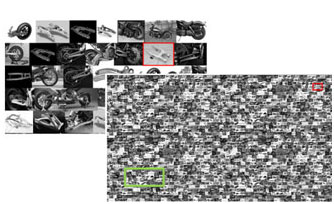
The ability to simulate product performance and product production is a key component of this strategy. Autodesk has a robust portfolio of standalone simulation products with Autodesk Nastran for mechanical, Autodesk Robot Structural Analysis for architectural structures, Autodesk CFDfor fluid flow, Autodesk Helius for composite analysis and Autodesk Moldflow for injection molding simulation.
By simulating a product design, users are able to virtually test and evaluate multiple designs in order to understand how they will perform under different loading and environmental conditions. Simulation allows a user to review the impact of different materials on the resulting product performance. It empowers a company to balance material and manufacturing costs with product performance to ultimately choose the configuration that meets design requirements as well as business objectives.
Mobile and cloud technology provide a fundamental shift that comes with new opportunities and expectations
The user can simulate various manufacturing processes in order to determine feasibility and estimate the manufacturing costs before taking a risk by investing in specialized equipment, tooling and material. Simulation of product performance early in the design phase provides the opportunity to remove the risk of costly tool changes during production and the need for extensive prototyping.
Simulation is an investment in not only software, but also in computing hardware. High-end computer resources that may be readily available at larger companies may not be at smaller companies due to the cost and maintenance of additional computing hardware.
By leveraging Autodesk’s cloud capabilities, users have instant access to infinite computing resources. Cloud computing enables users to evolve beyond analyzing a single design and minimum requirements, into simultaneously evaluate a vast array of designs and conditions in order to identify the best option. By having the ability to evaluate a large set of design options at the same time, companies gain tremendous insights into how their products perform and fail. The Autodesk cloud removes the burden from companies to purchase and maintain additional computing resources and provides elastic capacity as demands dictate.
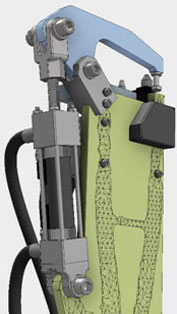
Perhaps the most exciting capability that comes from the intersection of simulation driven design and infinite computing is the ability for the system to actually participate in the design process, essentially redefining the ‘A’ in Computer Aided Engineering. As simulation becomes more entwined in the design process, the chronological sequence of design evolution followed by validation is replaced by simulation guiding the birth and evolution of the design itself. Today, users can simply begin by specifying an envelope with appropriate constraints and allow the software to iteratively come up with the best possible design. They can then fine-tune their design to meet their manufacturing constraints and achieve near-optimal solutions to meet their customers’ unique needs. The ability to harness cloud computing in the process spurs innovation without compromising on quality.
Technology touches every aspect of our personal and professional lives. Companies that adapt and embrace technology, which fosters innovation along with the ability to make better decisions, will have opportunities to transform entire industries. Autodesk is fully embracing this new reality and is helping companies make what was previously impossible, possible.

