









Simulating the Future of Making Things
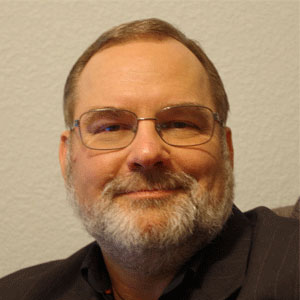
Scott Hudson, Director of the Simulation and Skills Center, The University of Texas at Austin
Scott Hudson, Director of the Simulation and Skills Center, The University of Texas at Austin
The use of simulation in healthcare education has been growing exponentially in recent years. Multiple factors are contributing to this growth: the increased competition for traditional clinical training sites due to the rising number of educational programs; the impact of the Affordable Care Act on hospital medicareMedicarereimbursement related to quality benchmarks; and the multiple studies that have validated the fact that up to 50 percent of traditional clinical training hours can be effectively replaced with quality “Simulated Clinical Experiences”(SCE).
The SCEis an experiential learning activity in which participants provide care for simulated patients in a realistic healthcare setting. Over the course of the SCE, the students participate in dynamic scenarios that test their ability to react on their feet, cope with real-world situations, apply critical thinking and demonstrate clinical skills.
It is important to understand that simulation is a teaching/learning technique, not merely a technology. Quality SCEs are time-consuming to develop and require expertise in both the subject matter and utilization of the simulation techniques and technology. The failure to recognize this reality in the past has led to institutions spending thousands on advanced equipment that has frequently ended up being underutilized or relegated to a closet when the one person who was trained to use it is no longer available.
In order to avoid this scenario and maximize ROI for the inclusion of simulation in a health care education program, the answers to the following questions are neededneed to be considered in the early stages of planning.
What are the Objectives of the Program? Is it just to replace hours in a bricks-and-mortar hospital because there is no room for students? Are you looking to expand opportunities for students to practice skills that either aren’t safe or are no longer allowed to perform on live patients? Simulations provide a good alternative because you can set up the scenarios in ways that are repeatable and predictable. This allows everyone to have a level learning experience, e.g. they all get to care for a woman with a high-risk pregnancy or a patient with asthma.
How does the Program Support the Mission of the Organization? Is research a key component of your organization? The controlled environment of a simulation lab allows for the collection of both statistical and behavioral data. If developing future educators is your goal, you can have a clinical classroom focused on teaching without the restrictions and distractions inherent in an actual hospital or medical office setting.
Where does this Fit Into the Organizational Strategic Plan? If you want to be seen as a leading center of excellence, this is what you need. Simulation has become a hallmark of advanced and top-tier organizations. But you can’t have simulation just for simulation-sake. The execution of the plan is also what determines how your organization is perceived.
Is it Intended to Fill an Existing Need? Is there a specific setting that you don’t have access to, such as a children’s hospital or a natural disaster to train healthcare providers in mass casualty response? Is there a component of the licensing board exam for which your students aren’t meeting expectations? You can create whatever situation you need in order to train your students in these areas.
Who are the Stake Holders? The highest stakeholders are your students; ultimately they are the ones who will benefit and whose outcomes will be measured. Do you need or want to partner with multiple departments or disciplines? Will you integrate faculty and/or students from Social Work, Medicine, or Pharmacy to practice communication skills-a key component in medical errors? Other stakeholders might include research grant recipients and donors. What is the grant meant to accomplish, and how can you use simulation situations to attain that?
Who will Use the Facility; what Capacity is Expected? Are there Opportunities for Outside Users? Will you serve a single school, a single level or a single program? Or will it be multi-disciplinary? How many students and scenarios can you handle at one time and what is the frequency needed? Will you have extended hours in order to meet the needs of the participants? Can you provide scenarios for public education, other organizations or filmmakers? Can you make a profit by charging for services to those outside your team?
How will Outcomes be Measured? Is it just raw numbers? Is it standardized test scores? Is it the number of published articles? Is it financial? Is it good survey results from the students at the end of each semester? Who determines if you are a success?
How will Building the Program, Including the Training and Technology, be Financed and Sustained? Is it grant-driven or a baseline budget item? If you get the technology funded through capital funding, how do you pay for the ongoing maintenance and continued training needed for faculty and staff as the equipment is used each year? How will you replace equipment as it reaches the end of its useful life? How will you pay to upgrade software and other technology as new and better methods continue to develop? What outside support will you need for IT, security and other ancillary concerns? What support will be readily available to help the group get up to speed, especially during the transition phases of the program?
The answers to these questions should drive the design and functionality of the facility and any technology that will support the simulation program. As the use of simulation in healthcare education continues to develop, it is important to focus on the underlying criteria for establishing the programs in the beginning of your planning process and in the context of your individual organization. There is no one-size-fits-all with simulations. You can go “turn-key” or you can go “custom, made-to-measure” on the technology, but atin the end it is the answers you derive during your planning that will determine whether or not the technology will fit you and be a success in the long-term.

