

A featured contribution from Leadership Perspectives: a curated forum reserved for leaders nominated by our subscribers and vetted by the Construction Tech Review Advisory Board.

Inland Revenue NZ
Changing with the Technology
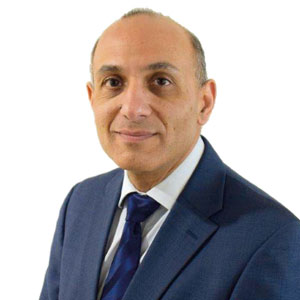
Yogesh Anand
Inland Revenue is an extensive government administration, working on improving the economic and social well-being of citizens. It collects 80 percent of the Crown's revenue as well as managing and disbursing social support program payments and providing the government with policy advice. Yogesh Anand, Director of ICT Solutions, outlines the transformation and upgrading of Inland Revenue NZ legacy infrastructure. He is accountable for vendor management, development of an organization-wide ICT plan and managing a team of over 200 technical professionals.
Prospect on the transforming from a legacy system
We are one of the largest government organizations in New Zealand. However, the technology that our system was operating had as the COBOL programming language, developed in the late 80s and early 90s. As a result, what we found out was that it was not responsive, mainly when it came to adopting new policies. As government decides the policy and decides to implement, it takes us longer to achieve since our technology does not support any stability or agility while performing. So, we started a business transformation project which is a business led technology, helping us become more customers centric, agiler and more automated intelligence-led. It made the organization’s interaction with people easier and smooth. It’s about every individual in New Zealand, so it is about looking at how individuals solve their tax-related issues, how they claim their social benefits and what can we do to make it easy. With the newer system, we tried making compliance more accessible for SMEs and larger enterprises as well. Additionally, we adopted the concept of being agile and that is how we responded to changing needs of our customers. If our customers are looking for some different ways to interact with us, we assist them in that space by being responsive and agiler. Also, we are moving more towards SaaS, which is making work more accessible for everyone.
Face up to the challenge of Co-existing
The current system that we had replaced was over a period of the time.
We are trying to bring in the business transformation to make tax payment simpler for every individual in New Zealand
It’s not about taking the existing people that now you’re going to work on the new technology and overlook the old because that doesn’t work. We have to maintain the current system and also ensure the thorough implementation of the new solution. Both have to work together with to provide a seamless service for customers. As we were moving from the paradigm, it’s a challenge for us to transition our people to this new paradigm. To give them an opportunity to develop and, at the same time, retain the IT so that we don’t lack the resources we need to support the current situation. This transition is the challenge that we are currently tackling, and we are looking for new strategies for the future, and at the same time, we don’t want to lose on the present.
New Partnerships on the Horizon
The services that we are seeking fall into two categories; one associated with niche, looking for our tax system and the other for solutions which can assist our tech system. There are very few providers that operate in that area and primarily for that particular solution, and thus we went out to the market globally in search of a solution. An organization provides the solution which we have chosen in the USA, and they were able to demonstrate how they can meet the requirements. We have also looked into services providers for our commodity system. We want to stand up as the solution which will evolve as our system develops and they are specialized in that area. In all instances, the critical aspect is the outcomes we are looking to achieve. Therefore, we go through a rigorous process of selecting the partners for the procedures.
Moving Forward with Disruptive Technologies
I think the key word I would use is being agile and being able to respond to the changing trends. For instance, when we started our transformation journey, we were very much focused that we are not going to own anything, will be outsourcing to a large extent, and have infrastructure as a service type of construct. Cloud wasn’t a big thing because to some extent our legislative environment was such that we were not able to utilize cloud services being a government department, now our environment is changed where we can, and we have shifted our thinking. We are very much looking at what cloud offers us as technology, so that’s a helpful example of recognizing that there is a serving opportunity for us to being agile and being able to adapt and adopt the new technologies.
We have a roadmap that we are following we know precisely what we want to do but at the same time as and when we come to implementation cycle we reassess what is on the roadmap outcome. The strategy is looking from the business outcome perspective, showing flexibility, and being realistic about what we want to achieve is what I think one of the successful things for us.
We have come from a very deep-rooted culture of the organization, and we are changing that around at the moment to be agiler and DevOps tracking model. Being clear and having an upfront conversation about why do we want to achieve this, what are we going to accomplish by doing this and then answering back to our people is our culture. If you kind of look at the success we have had in the space--we have gone from people saying this is another fag why would you do this; to people saying we want to do more of this.
