

A featured contribution from Leadership Perspectives: a curated forum reserved for leaders nominated by our subscribers and vetted by the Construction Tech Review Advisory Board.

Alpha Natural Resources
Revolutionizing Industrial Mining through Smart Tools
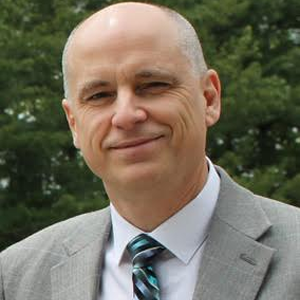
Jeff Bauserman
How has your IT operating model changed during the last five years in Metals and Mining industry?
Alpha Natural Resources began as a “roll-up” company with three initial acquisitions of existing coal assets in 2002-2003. An ERP evaluation was conducted at the time and it was decided to implement Oracle e-Business Suite for all accounting functions, including Payroll and HR. Initially, the Oracle Applications and Database were hosted by a third party. As the company grew to $7 Billion in Revenue and 15,000 employees, the Oracle ERP was re-implemented with the R12 offering and the databases were brought on-premise and hosted on Oracle’s Exadata machine. The performance gains were sizable and the Oracle Applications, including OBIEE, enjoyed widespread approval and adoption. However, the bottom of the Coal Market fell out and the company was forced into bankruptcy. Upon emerging from bankruptcy—Alpha was split into two separate companies: Alpha Natural Resources (ANR) and Contura Energy. Both companies featured an employee base of between 2,500 and 3,000 and neither could support the substantial ERP infrastructure that was in place. Contura opted to go with a SaaS model featuring Microsoft Dynamics AX7 / UltiPro HRMS and ANR migrated to Workday Financials and Ultipro HRMS SaaS model. The cost savings for both companies were significant enough to cover the cost of implementing new systems.
1. What is your main goal at Metals and Mining Industries?
Most industry experts are in agreement that the Coal Industry is not dead, but that it will never return to the size it once was in the United States. Till date, there is still an oversupply of coal inventories in the US, and market conditions are challenging due to Natural Gas gaining market share due to new fracking extraction methods. Hence, coal suppliers must take a much more nimble and flexible approach towards information technology and systems moving forward. Our goal is to build a new ERP infrastructure that is robust, as well as flexible, to easily ramp up or down depending on market conditions.
2. Moving from traditional IT to a service offering model requires a major mindset shift in IT. How did you make that happen?
A lot of the decision making was driven by current economics. The greatest challenge has been dealing with a workforce that was accustomed to driving a “Hummer”, but is now being asked to drive a “Camry”—in terms of the functionality of IT systems.
We have busted through the office confinement, our technology follows us wherever we go
Everyone seems to understand that we have to make budget cuts in order to survive in the new coal markets—but when they see what those budget cuts mean in terms of IT services, they are reluctant to give up tools that have helped them be efficient in the past. It is the age old quandary of trying to do more with less. When coal was king, operations got whatever operations wanted in terms of IT services. In this new world of cost justification, systems have to be weighed in the balance to see if there are concrete returns on investment that justify expenditures. There are many “nice-to-haves” that add convenience and comfort, but will the current market price support such luxuries? It is a question that every department in the company must now evaluate and such analysis must be supported and owned from the CEO down.
3. What set of skills do you think is required for the technology leaders to be successful in the new Metals and Mining landscape?
To be successful in the new Metals and Mining landscape, technology leaders need to have a savvy business acumen coupled with solid technical skills. There is an old saying in the IT world that we can do anything you want—at a cost. Just because we can do something, does not necessarily mean we should. No stone of the IT world should be left unturned. Contracts and maintenance agreements must be scrutinized as they can impose cost structures for extended periods of time that may be hard to get out of when the market turns. Telephony and network engineering must be continually evaluated and options for better service at lower prices sought. Metals and Mining (especially coal mining) are often not located in the hub of civilization with a plethora of connectivity options. The IT teams that solve these “Rubik’s cube” puzzles can give the business a substantial advantage over the competition. Use of SaaS offerings and efficient use of mobile technology can also set apart well run IT departments from the rest of the pack.
Which growing or future technology innovation are you personally excited about?
Personally, I am most excited about the increasing accessibility of technology. For decades, we were tethered to an office with sufficient bandwidth. Now we have busted through the office confinement and our technology follows us wherever we go. Whether we are camping under the stars or flying at 40,000 feet—we can remain connected. The world has become our campus.
We are all dealing with technology every day. How does technology drive your life?
Technology drives every facet of my life. Technology is at the heart of the new world. Millennials are described as “digital natives” as opposed to the aging workforce who are “digital immigrants.” Technology, more than ever, deserves “a seat at the table” because of its far reaching effects on business planning and performance. Embracing technology can transform our lives for the better. As in most other tools, it’s inappropriate use can also be a distraction and in some cases—an addiction. Today my technology influences my life 24/7. Even at night now—my Fitbit Charge 2 monitors my sleep and gives me feedback in the morning, feedback that can be useful in helping me have the appropriate energy to meet the demands of a new day. My drive to work consists of listening to podcasts downloaded to my iPhone and then played over the car stereo via Bluetooth. The workday is drenched in technology from beginning to end; it used to be that one screen was sufficient for any office employee. Now, no self-respecting office employee will have less than two monitors and often times three. Winding down at night will find me either browsing the internet and social media or streaming a movie to the TV. Technology is here to stay; those who harness its power will define the future.
