

A featured contribution from Leadership Perspectives: a curated forum reserved for leaders nominated by our subscribers and vetted by the Construction Tech Review Advisory Board.

Veolia Australia and New Zealand
The Importance in Staying Ahead of Technological Disruptions
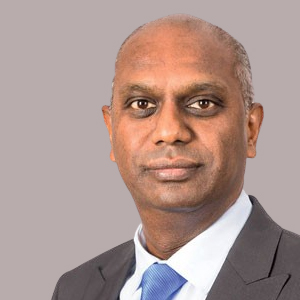
Satha Pillay
Within the Australian market, a major challenge faced by segments of the SAP customer base today is the level of information available regarding the S/4HANA product/s. The information provided by SAP is sales and marketing orientated information rather than engaging customers with information on products, product functionality, and product roadmaps. The latter information set is more important to me as a CIO when I consider a 3-5 year view of enterprise landscape and how that landscape needs to evolve to support my business objectives and business strategy. I am not looking for the 250-page technical release notes document but rather, a concise summary of the benefits of the new release and how it will support my organization from a technology, roadmap, and capability perspective.
From a product perspective, Veolia implemented SAP S/4HANA in 2016, and we are yet to understand its full capability, especially given its relative infancy in the market. SAP S/4HANA is relatively new to the market, and I think there is a general lack of understanding of its capabilities and the challenges it poses to its customers. The way we use it is really not very different from the way we have used the previous SAP system. So the challenge facing us as a customer is "Why S/4HANA?” A key benefit that we see in S/4HANA is the role it plays in our digital transformation and innovation and the mobility it provides our employees via the Fiori apps.
2. What are some of the key trends that could help companies tackle these challenges?
Delivering valuable information to decision-makers is always a challenge. From Veolia’s point of view, we are eager to learn more about the platform by consulting directly with SAP, talking to other organizations, accessing online sources, and attending industry events, where relevant information and topics on S/4HANA are being presented and discussed.
Many organizations, like Veolia, are constantly evolving their digital roadmaps. In addressing the transition to S/4HANA, customers like ourselves are trying to understand the value in, and the most effective process for implementation of the platform. This is where sharing customer journeys and transition experiences prove invaluable.
IT leadership must remember that it is not how you fit people into your mold but how you work around their talent
Security is another key aspect that needs to be addressed. In the past, an organization's ERP system was not considered the primary target for cyber criminals but this has changed and security has to form a crucial part of the system design. This includes from an infrastructure, network, application, and user perspective. As such, management of data in the SAP environment is a challenge. It is imperative that people who have access to personally identifiable information within the environment are aware of their responsibility and how to protect this information and improve controls around them and their access.
3. What are some of the strategic points that you go by to steer the company forward?
There has been a shift from the traditional way of managing the IT environment to partnering with the business to help drive innovation and gain competitive advantage. From a strategic perspective this means working closely and in partnership with the organization’s executive leadership team to understand and align the IT organization with the corporate strategy. It's about how we drive the agenda of innovation within the organization. Within Veolia, creating an environment where collaboration between IT and all aspects of the business to foster innovation and ideas is something I have been working on. The priority here is to look at both our internal and external customers’ needs and then working together to drive a solution. This is because IT will propose initiatives from a technology perspective, but then the application of the product or service to our customers can be an enormous task. Therefore, innovation needs to be a collaboration between business and IT stakeholders at all levels. Ideally, you need to anticipate your customers’ needs and then deliver them the solutions.
4. How would you see the evolution a few years from now regarding the transformations happening in the landscape?
The trend that we are going to see would not be merely from new technologies driving innovation and disruption but also organizations coming up with new business models. As an example, I look at how Airbnb disrupted the travel accommodation industry. It wasn't technology they used to disrupt the industry but rather they changed the industry business model, supported by technology. I see this as the way to generate and sustain disruption and get ahead of pure technology disruption.
5. What would be a piece of advice that you would like to impart to your fellow colleagues or CIOs out there who look to embark on a similar venture along the lines of your service?
When you look at your digital transformation program, do not fall into “fear of missing out”. There are a lot of innovative technology solutions out there looking for problems. My advice would be to understand what your business requires to support their growth strategy. Consider what the wider industry is doing and what disruptions could impact your organization. Create a core that supports flexibility but also looks at the economic feasibility and viability; creating a platform that allows your organization to continually innovate and evolve. Look for innovation and breakthrough projects outside of your industry and determine whether these can be adapted to your organization. Learn from other organizations and look at anything that you do in a responsible manner and don't be dazzled by the latest gimmicks when you are looking to solve a business problem.
