





APAC CIOOutlook
About UsConferencePartner With Us
  • Technologies
    • Blockchain
      Data Intelligence and Management
      Digital Transformation
      FinTech
      Generative and Agentic AI
      Low Code No Code
      Mobile Application
      Networking
      Robotics
      Storage
      Wireless
  • Industries
    • Automotive
      Aviation
      Banking
      Construction
      E-Commerce
      Food and Beverages
      Healthcare
      Insurance
      Logistics
      Manufacturing
      Retail
      Supply Chain
      Travel and Hospitality
  • Platforms
    • Microsoft
      Salesforce
      SAP
  • Strategic Solutions
    • Business Intelligence
      Contact Center
      Corporate Finance
      CRM
      Cyber Security
      Data Center
      Enterprise Asset Management
      Enterprise Performance Management
      IT Infrastructure and Services
      Managed Services
      Procurement
      Unified Communication
      Workflow
  • Home
  • CXO Insights
  • Leadership Perspectives
  • Innovation Insights
  • Research
  • News
  • Whitepapers
  • CXO Awards
#

Apac CIOOutlook Weekly Brief

×

Be first to read the latest tech news, Industry Leader's Insights, and CIO interviews of medium and large enterprises exclusively from Apac CIOOutlook

Subscribe

loading

THANK YOU FOR SUBSCRIBING

  • Home
Editor's Pick (1 - 4 of 8)
left
Cementing Position in the IT Driven World

Mike Anderson, CIO, CROSSMARK

Business Analysts: Delivering Client Strategy through Agile Consulting

CEO

The Unique Challenges of Being Agile In a Large Global Corporate

Charles Thompson, Chief Information Officer, Vanguard Investments Australia

Gaining Access to the Future with Machine Learning

Hemal Shah, Executive Director, Product Delivery & Regional CIO APJ, DELL

Harvest Innovation from Omni-Direction Technology Up Gradation

Sanjeev Kumar, Chief Information Officer, ApON India

Mastering the Art of Technology-Driven Collaboration in the Modern Construction Arena

Martin Espericueta, Senior Project Manager, Lifestyle Communities

Helping startups to minimize their risk of failure

John Lim Jian Da, Partner, Meet Ventures andDirector, HT Marketing Agency

How UX relates to Agile and DevSecOps

David Bejar, Chief Information Technology Officer, Allianz Indonesia

right

Leading Enterprise Agile Transformation Series - Chapter 2: From Agile to Enterprise Agility

Parikshit Basrur, Director, Enterprise Agility, Deloitte

Tweet
content-image

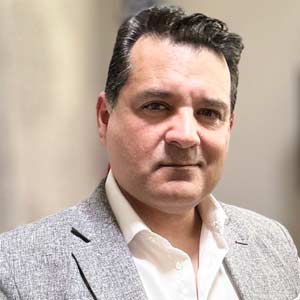
Parikshit Basrur, Director, Enterprise Agility, Deloitte

This article is second in the “Leading Enterprise Agile Transformation” series and follows on from the (March 2017 issue) publication. I identify 4 key ingredients for success (a) type of leadership, (b) level of enterprise adoption, (c) approach to execution and (d) stickiness. My focus is now on the key challenges that are faced on this journey. Some of these are internal to organizations and others are driven by market forces. First, I present the problem statement, analyse root causes with proof points to arrive at “leadership” as an essential missing ingredient and in conclusion, recommend that we, as practitioners and thought leaders, reframe “Agile” to its real form – “Enterprise Agility”.

The McDonald’s Drive-thru Approach

Organizations everywhere claim to be undergoing some form of an enterprise agile transformation or the other - I have come to believe that we, now, live in the age of transformations. Among the approaches is one which seems to be quite popular – I call this, “The McDonald’s drive-thru Approach”. I am sure most of you know how a drive-thru works. Imagine you are driving on a highway and feel hungry. You don’t want to stop and would prefer something quick, relatively cheap, tasty and convenient. You see the yellow archway and pull in, look at the set menu with pre-ordered meals and drinks, order, pay and drive off, a total of five minutes at the max. What drives your choice to fast-food than a healthy, nutritional meal? Fast, cheap, convenient and instant results.

Let’s look at it through an “Agile” lens. It usually starts with an executive announcing that “they have to become an Agile organization”. External parties are engaged to staff augment. Without a deep understanding of the business or their problems, a menu of solutions is presented. Scrum, Kanban, SAFe, LeSS or the Spotify Model. A templateAgile playbook is published and rolled across the entire organization, detailed with roles, responsibilities and a comprehensive operating model. Staff is sent on “agile” training and an army of external (generally contract) “Agile Coaches” brought on board, with zero influence to rollout the playbook.

So, what’s happening under the hood? The external agencies promise cost savings of 10-30 percent by changes to job families which result in large-scale redundancies. Loyal employees who have given most of their lives and careers to this organization are walking out with fat paychecks and organizational knowledge. The opportunity to bring them along the journey and make them key change champions, all lost. Phrases such as “agile”, “new ways of working” now equating to a loss of income. The same executive who made the announcement earlier now affirms “we have completed our Agile transformation” in a matter of 6-12 months. The layoffs are having a direct impact on the company’s bottomline. The executives handsomely rewarded for their efforts, as is the external agency. The remaining employees wondering “We are Agile, what now?”, “How has this changed our life?”, “Has this made it any better than before?”

Reflection

Now, let us rewind the experience and reflect. “Are my business problems the same as everyone else? No, they are unique. So then, why is my solution just like everyone else? Am I in a position to create a new way of doing things? Why don’t I find innovative solutions for my problems? How do I empower myself today? How do I change the current state short-term, quarter-by-quarter, cost-driven bottom line thinking? And finally, how do I lead in this space of fear, uncertainty, doubt and constant change. I believe that before we can create new ways of working, we need to change our way of thinking, creatively destroying our old world view. Only then, can you create a new one. So, let us get a few fundamentals right starting with first reframing what this term “agile” really means.

#ReframeAgile

There is no such thing as an agile transformation or a digital transformation. It is only ever about an organizational transformation. Agile, digital, etc. are enablers. It’s about people, not processes and tools. It is organic, not inorganic. It’s about the soft stuff, not the hard stuff. It is internal, not external. And finally, it is about you. Not your customer. The customer does not care if you are undertaking an enterprise agile transformation. Make it about you, your people and your culture. All the fuzzy bits that will make your organization an amazing place to work. So if you think you are doing it for the right reasons to save costs and profitability, my advice for you – donot do it. What then is “agile”? How do you create an “agile” organization? And what does an “agile” organization look like?

Core Competence

Core competence is a concept introduced by C.K. Prahalad and G. Hamel in their seminal paper “The core competence of the corporation” in 1990. The core competence of an organization is defined as the collective learning in the organization, especially the capacity to coordinate diverse production skills and integrate streams of technologies. Organizing around core competencies requires a radical change in corporate organization”. I believe that “Agile” in its true form “Enterprise Agility” is the new-age core competence that organizations must build today.

The Shift from Agile to Enterprise Agility

How do you create enterprise agility within an organization? As leaders, you are all facing this challenge. Most of you are internally wired to old-age management thinking driven by Frederick Winslow Taylor’s school of scientific management. Your philosophy is driven by efficiency, throughput, performance, standard processes and control. Concepts which worked well for you in the last century will fail you in the future. The world of tomorrow is unlike the world of today. Therefore, you need to change your management style and philosophy to be successful.

Enterprise agility, the ability to respond to market changes faster than they occur is no longer a competitive advantage. It is the new normal. And you, as a leader, need to change your internal wiring. So how do you stop being you? And step into a space of creating an organization that does not have multiple layers of management and does not have hard performance metrics. A learning organization where employees have a long term tenure. So they do not have to worry about securing income, learn and build an organization that learns from within. Learning is the first step towards innovation. Care for your employees, love them and eliminate short-term quarter-by-quarter performance measures. Start thinking about your people and stop thinking about your shareholders as happy employees will create happy customers. You need to stay in the long game, think of decades ahead. What will be your legacy? Would you be known as someone who led cost-leadership and let go of your people or someone enabled them learn, change and undergo a personal transformation for leading the organization? The choice is yours.

Conclusion

Over the last 15 years, I have led multiple enterprise organizational transformations as a management consultant and an executive. My life’s journey has taught me that you need to first define the purpose. “What does agile mean for me? For my people? For my organization?” Then build the strategy. Think long-term, 2-3-5-10 years ahead. Create the roadmap for the future, own your destiny, stay on for the long game, build the capability, fight the good fight to attract and retain the right talent, invest in them, support them with the right tools and processes and unleash their creativity. Your legacy will be remembered long after you are gone for how you made it easier for those who came after you.

Weekly Brief

loading
Top 10 Agile Services Companies - 2022
Top 10 Agile Solutions Companies - 2022
Featured Issue

I agree We use cookies on this website to enhance your user experience. By clicking any link on this page you are giving your consent for us to set cookies. More info

APAC CIOOutlook
Follow on LinkedIn

About

  • Home
  • About Us
  • Partner With Us

Stay Connected

  • Subscribe
  • Newsletter
  • Sitemap

Contact Us

  • editor@apacciooutlook.com
  • sales@apacciooutlook.com
  • marketing@apacciooutlook.com

Legal

  • Editorial Policy
  • Privacy Policy
  • Terms of Use

© 2026 APAC CIOOutlook. All rights reserved. Headquarteblue in Fort Lauderdale, FL, USA.

This content is copyright protected

However, if you would like to share the information in this article, you may use the link below:

https://www.apacciooutlook.com/views/leading-enterprise-agile-transformation-series-chapter-2-from-agile-to-enterprise-agility-nwid-6369.html