





Predict the Future with Digital Twins
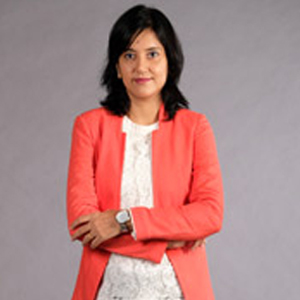
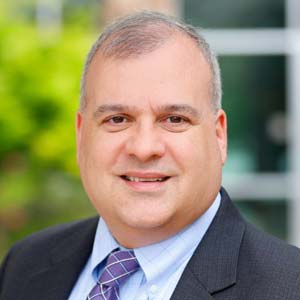
Dr. Adrienne Heinrich, Vice President and AI Center of Excellence Head at Union Bank of the Philippines (UnionBank) and Aboitiz Data Innovation (ADI)

Dr. Adrienne Heinrich, Vice President and AI Center of Excellence Head at Union Bank of the Philippines (UnionBank) and Aboitiz Data Innovation (ADI)
Dr. Adrienne Heinrich is the Vice President and AI Center of Excellence Head, Union Bank of the Philippines (UnionBank) and the Aboitiz Data Innovation. Under trail blazing leadership, UnionBank and Aboitiz BUs are undergoing a digital transformation journey, implementing digital twins and AI to reinvent customer interactions and services,to become more efficient in improving performances and to introduce new game-changing features.Dr. Heinrich also oversees Data Science and AI innovation initiatives for cross-business solutions anchored on financial inclusion. She oversees and co-creates game-changing solutions, leveraging on her 14 years of expertise in the field of AI.
How are digital twins helping industry leaders in revamping manufacturing and industrial processes?
We are in the era of Industry 4.0 where digital twins thrive thanks to the prevalence of connected (IoT) devices and sensors that are nowadays more commonly installed on equipment. The abundant data,, is crucial to building a digital twin for a product. I believe the main benefits of its implementation are cost savings,increased efficiency regarding operational optimizations and predictions of future or hypothetical states.Performance improvements are accelerated because simulations of possible interventions can be carried out on the digital model and the interventions with the best results can be identified in the digital twin simulations. Of course, there’s more to digital twins than these benefits. One does not require to implement all ideas for e.g. new features or changes in order to understand the impact these new features or changes would have. Apart from that, digital twins will enable more innovations since the new insights from these simulations will inspire fresh ideas that can immediately be tested. In short, we reduce the time needed to introduce both an exciting and functional new product or service to the market.
Combining AI with the digital twin concept is a promising trend. Using AI, we can build digital twins with existing data of physical models. An alternative implementation of a digital twin is valuable when the AI model does not have sufficient training data to learn from. In this case, a richer data set can be produced with simulated data by the digital twin which serves as input to the AI model. This powerful combination results in improved and efficient decision-making and enhances machine learning models. Therefore, industry leaders and decision-makers who engage in this innovative way of product development and monitoring save a lot in terms of time and cost upon using digital twins.
Can you summarize the applicability of digital twins? What are some of the problems faced by your clients in seamlessly adopting it in the AI space or industrial manufacturing space?
For a digital twin to be useful and accurately reflect its physical counterpart, it needs to be built with good quality data and sufficient data examples. This entails data covering real-world situations so that the digital twin is as representative as possible and can continuously adaptto the dynamic digital and industry landscapes. One challenge people face while applying digital twins is the imbalance of data. If there is an insufficient sample size, we cannot build a good representation of the physical world, resulting in an ineffective model.
It can sometimes be difficult for digital twins to provide a comprehensive perspective of the situation; as in the case of one of Aboitiz Group’s business units, when an accident occurs in one of our power plants, it affects numerous pieces of machinery rather than just one. It is not an isolated event but rather contributing factors and correlated events in multiple parts of the plant. That is why it is necessary to develop a holistic digital twin that considers the interoperability among equipment in a power plant.
In addition, applying digital twins to model people’s behavior can cause discrepancies since human behavior is dynamic. In the banking and financial services sector, this problem arises when dealing with fraud. A fraudster tries to hide within the diversified ‘normal’ or usual customer behavior. When a fraudulent behavioral pattern is detected because it is abnormal, the digital twin can track the activity without delay. But once spotted, the fraudsters can immediately adapt to the situation, and adopt another channel or behavior to commit the crime again while hiding in newly found ‘normal’ behavioral patterns. Therefore, the digital twin models need to adapt continuously.
Can you share an instance about the usefulness the applicability of digital twins?
Since I head the AI Center of Excellence of UnionBank, fraud can be a good example to relate. Let me elaborate on the problem and the way we combat it.
Six months into the pandemic, the Philippines experienced a 200% rise in phishing scams. Filipinos lead a very active social media lifestyle, making them easy prey for scammers. In fact, reports say that the country hasone of the highest percentages of phishing scams in Southeast Asia. Due to its prevalence, we are continuously acting on it and being proactive about educating our customers.
For example, a phishing fraudsterwill copy the look and feel of our communications ; the victims may believe they are dealing with a legitimate party. Through SMS and emails inducing excitement or panic, victims might click on the malicious links and enter their credentials which are later misused.
For a digital twin to be useful and accurately reflect its physical counterpart, it needs to be built with good quality data and sufficient data examples. This entails data covering real-world situations so that the digital twinis as representative as possible and can continuously adapt to the dynamic digital and industry landscapes
We utilize digital twins in two ways to combat this fraud - phishing prevention and phishing detection. Phishing prevention uses AI algorithms and the digital twin to identify the customer demographics most vulnerable to phishing. With this knowledge, we can personalize communication and be proactive with our anti-phishing campaign by educating them. On the other hand, phishing detection uses digital twins and AI to design and train a model that detects the legitimacy of ongoing transactions.
The power of using digital twins lies in the simulation of different hypothetical scenarios and trade-offs thereof which allows us to choose the approach with the most optimal outcome before actual implementation. For instance, if a digital twin tells us that we can detect 95% of all phishing transactions but only identify 80% of non-phishing transactions correctly, we may be satisfied with the 95% phishing detection rate. However, the results also tell us that 20% of customers will be bugged by us because they have legit transactions that are misclassified as phishing transactions. Digital twins can help in finding the right sweet spot for such trade-offs.
What advice would you give to the people venturing into AI and digital twins?
I would advise them to always start with the problem, the need, the pain points. From there the best solution shall be found which may or may not include AI and digital twins. I strongly believe that we should not force fit technology to problems for the sake of using trendy technology. In case the best solution does involve AI and digital twins,we need to ensure that we can build the foundation for a sufficiently holistic representation of the physical world. For this, we need to 1) fully understand the space or real-world scenarios the digital twin shall operate in (in a much broader perspective than technology alone to ensure maximum impact), and 2) ensure that the data is representative (i.e., sufficient and of good quality) for all situations we would like to cover. Data are really core to high performing AI and digital twins.

